
China, in pictures and music.
For the longer answer to one question behind this film, read why the Chinese tea ceremony is newer than it looks.
茶 chá — tea. 喝茶 hē chá — to drink tea. 我喝茶 wǒ hē chá — I drink tea.
館 guǎn — a teahouse. 茶館 chá guǎn — a teahouse. 我去茶館 wǒ qù chá guǎn — I go to the teahouse.
All true tea comes from one species of plant, native to the highlands where China, Myanmar and India meet. What we call green, yellow, white, oolong, red and dark tea are not six plants. They are six ways of treating the same leaf.
On this page: the six families side by side, the five steps of the making, the vessels you drink from, and ten Chinese words from the film.
Tea, Part One — the film in full, free of narration: English letter cards with Chinese beneath them, and instrumental music.
Tea, Part Two – the film in full, free of narration: English letter cards with Chinese beneath them, and instrumental music.
For the longer answer to one question behind this film, read why the same leaves make six kinds of tea.
About the music
Scored in three parts, played by hand on Chinese instruments, with no voice at all: guqin and xiao first, then dizi, pipa and a low frame drum, then erhu. All three pieces are on the Music page.
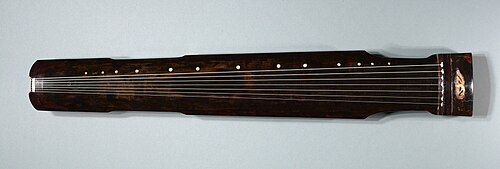
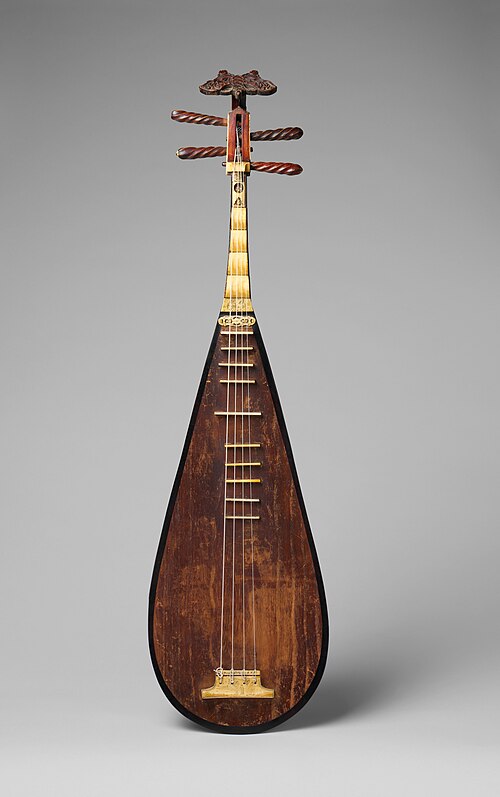
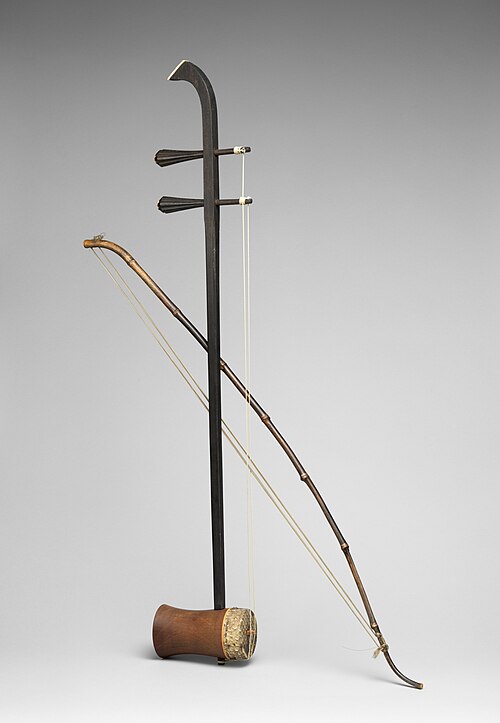
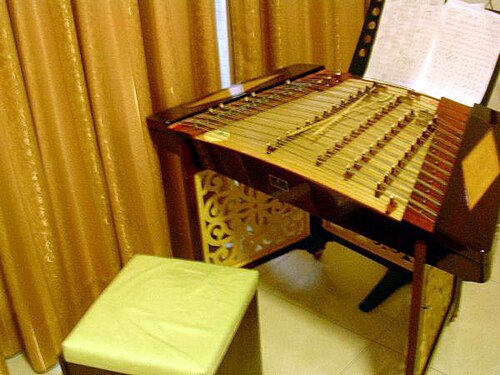
Instruments heard in this episode. Photographs: Guqin; Pipa; Erhu; Yangqin.
The six teas
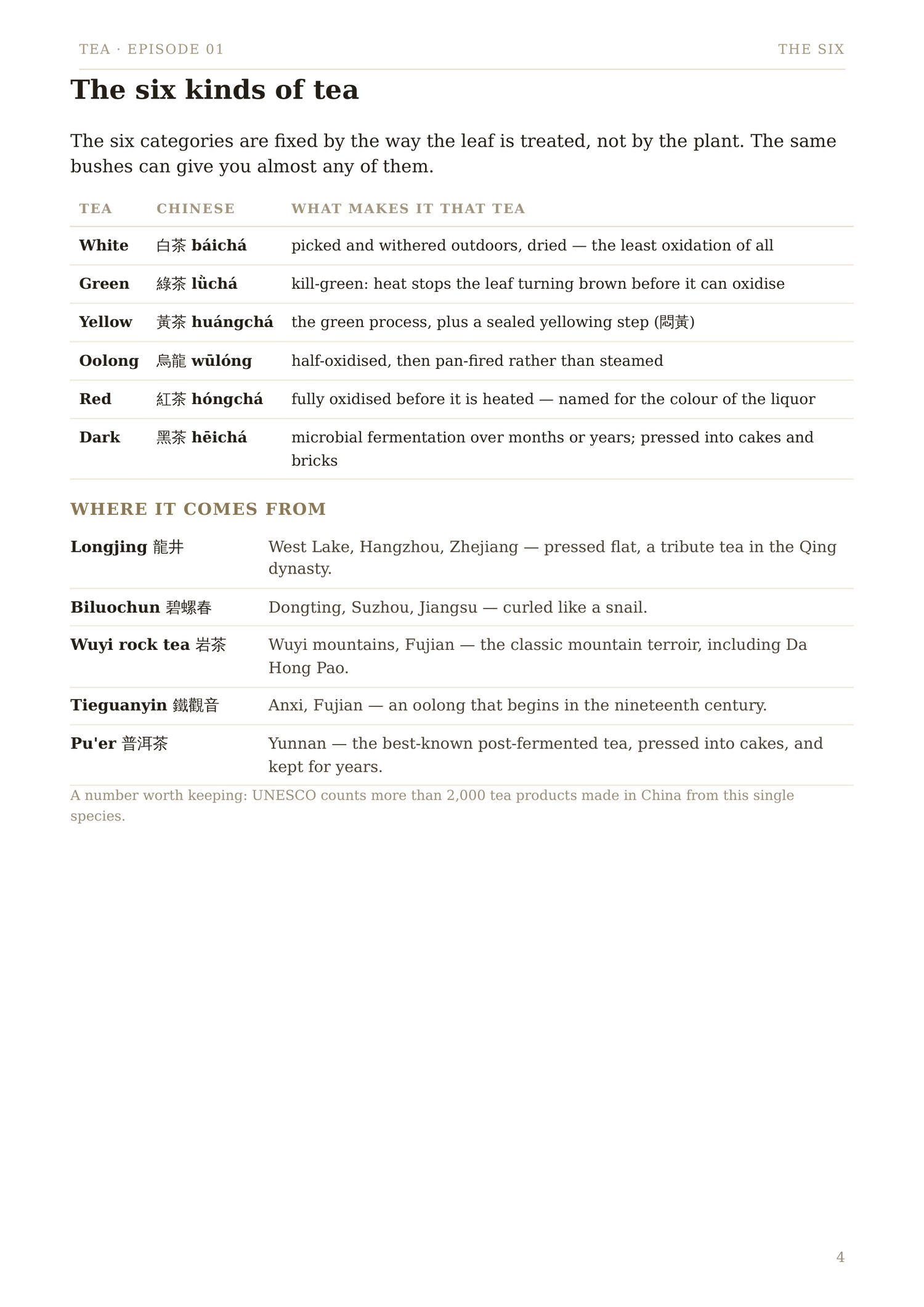
UNESCO’s list of traditional Chinese tea processing techniques counts six families — green, yellow, dark, white, oolong and red — and, with re-processed teas such as scented ones, more than 2,000 tea products in all.
| Tea | Chinese | The step that makes it | What to look for |
|---|---|---|---|
| White tea | 白茶 báichá | Withered outdoors and dried. The least oxidation of all. | Buds covered in fine white down. |
| Green tea | 綠茶 lǜchá | Kill-green: heat — pan-firing or steaming — stops oxidation at once. | Fixings the leaf with heat go back to the Han dynasty (206 BC – AD 220). |
| Yellow tea | 黃茶 huángchá | The green process plus a sealed yellowing step. | Junshan Yinzhen from Hunan is the best known. |
| Oolong | 烏龍 wūlóng | Half-oxidised, then pan-fired rather than steamed. | Pan-firing comes from Songluo in Anhui in the Ming, and spread to Wuyi — most likely where oolong began. |
| Red tea | 紅茶 hóngchá | Fully oxidised before it is heated and dried. | The Chinese name takes the colour of the liquor, not of the leaf. |
| Dark tea | 黑茶 hēichá | Microbial fermentation, not oxidation — months to years. | Pressed into cakes, bricks and bowls; Yunnan pu’er can be raw or cooked and improves for years. |
Where the tea grows
| Province | Place | Tea |
|---|---|---|
| Zhejiang | West Lake, Hangzhou | Longjing — tribute tea in the Qing dynasty |
| Jiangsu | Dongting Mountain, Suzhou | Biluochun |
| Fujian | Wuyi Mountains | Rock teas and oolongs, including Da Hong Pao and Lapsang Souchong |
| Fujian | Anxi county | Tieguanyin — from the nineteenth century |
| Yunnan | — | Pu’er, the best known post-fermented tea |
| Hunan | — | Fuzhuan brick tea, Junshan Yinzhen |
| Anhui | — | Liuan basket tea |
The year the leaf changed shape
For centuries the imperial tea of the Song was pressed into cakes at Beiyuan in Jian’ou. In 1391 the Ming court ordered tribute tea to be sent as loose leaf instead. Beiyuan’s output collapsed and the centre of the industry moved west, to the Wuyi mountains in Fujian — which is where much of the character of later Chinese tea was set.
The making
Five steps turn a leaf into a tea, and one of them decides everything that follows.
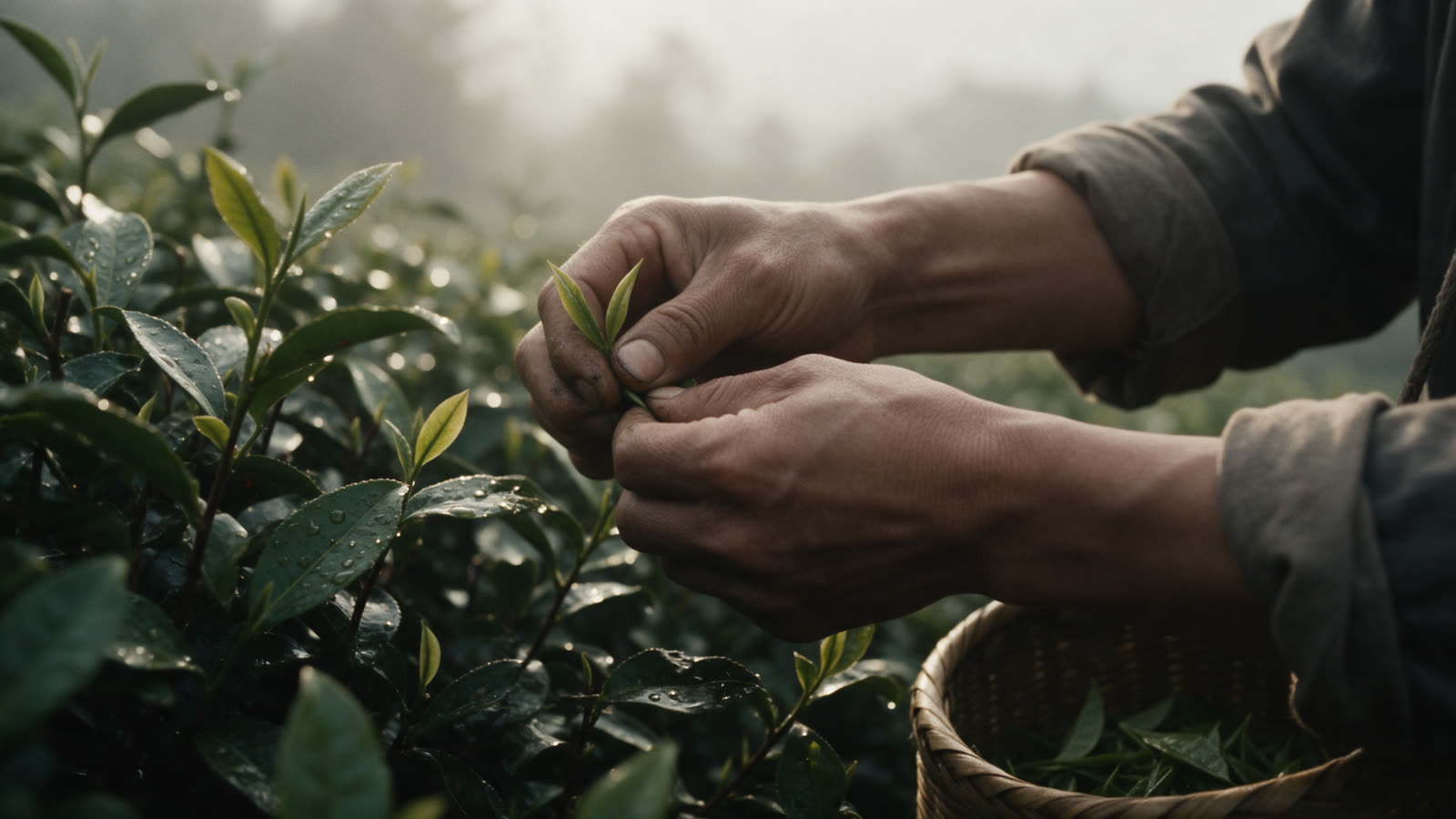
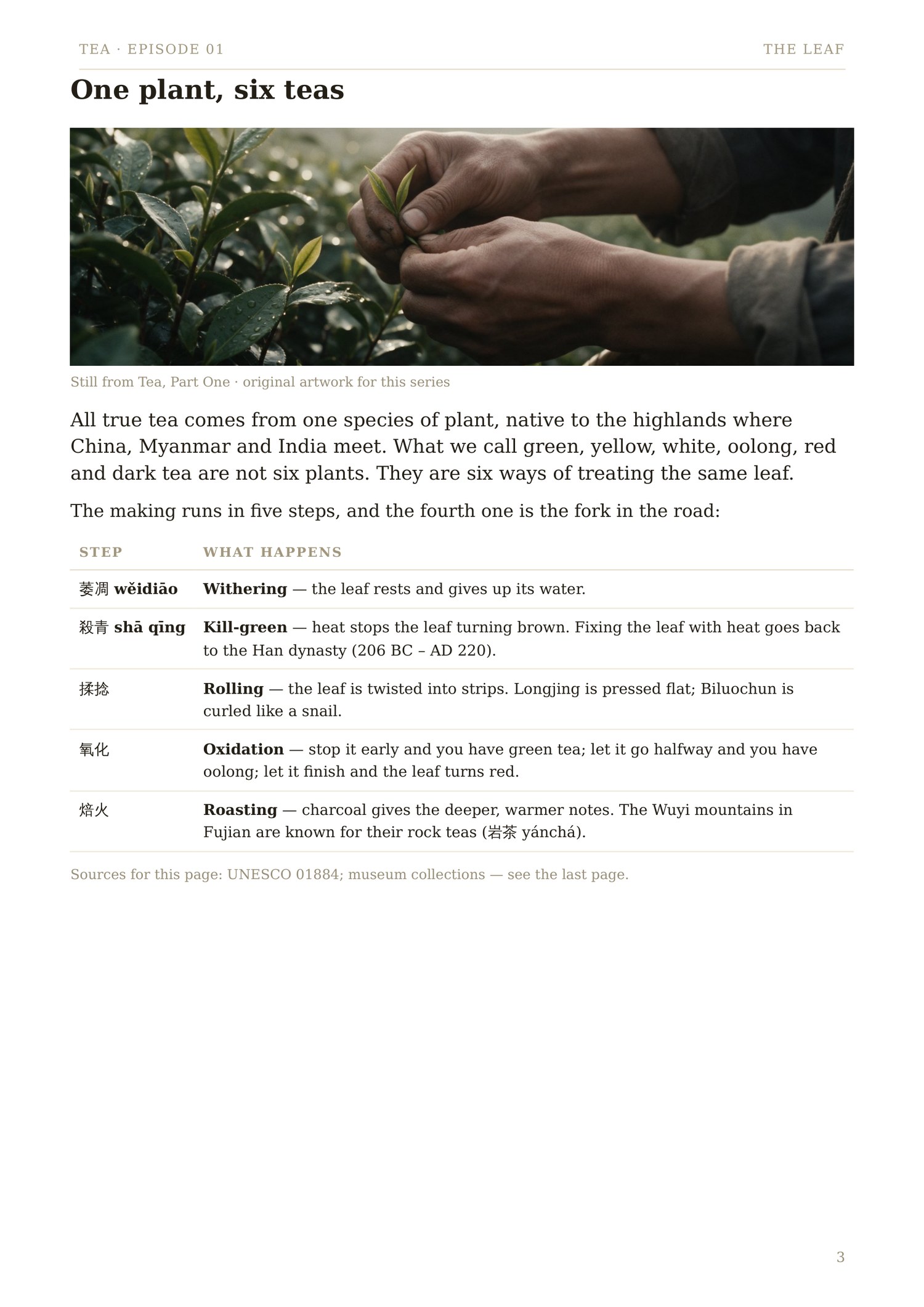
- Picking — by hand, bud by bud: one bud and the two leaves below it.
- Withering — the leaf rests and gives up its water (萎凋, wěidiāo).
- Kill-green — heat stops the leaf turning brown (殺青, shā qīng). Fixing the leaf with heat goes back to the Han dynasty (206 BC – AD 220).
- Rolling — the leaf is twisted into strips. Longjing is pressed flat; Biluochun is curled like a snail.
- Oxidation and roasting — the real fork in the road. Stop it early and you have green tea; halfway and you have oolong; let it finish and the leaf turns red. Charcoal roasting gives the deeper, warmer notes of the Wuyi rock teas (岩茶, yánchá).
The vessels
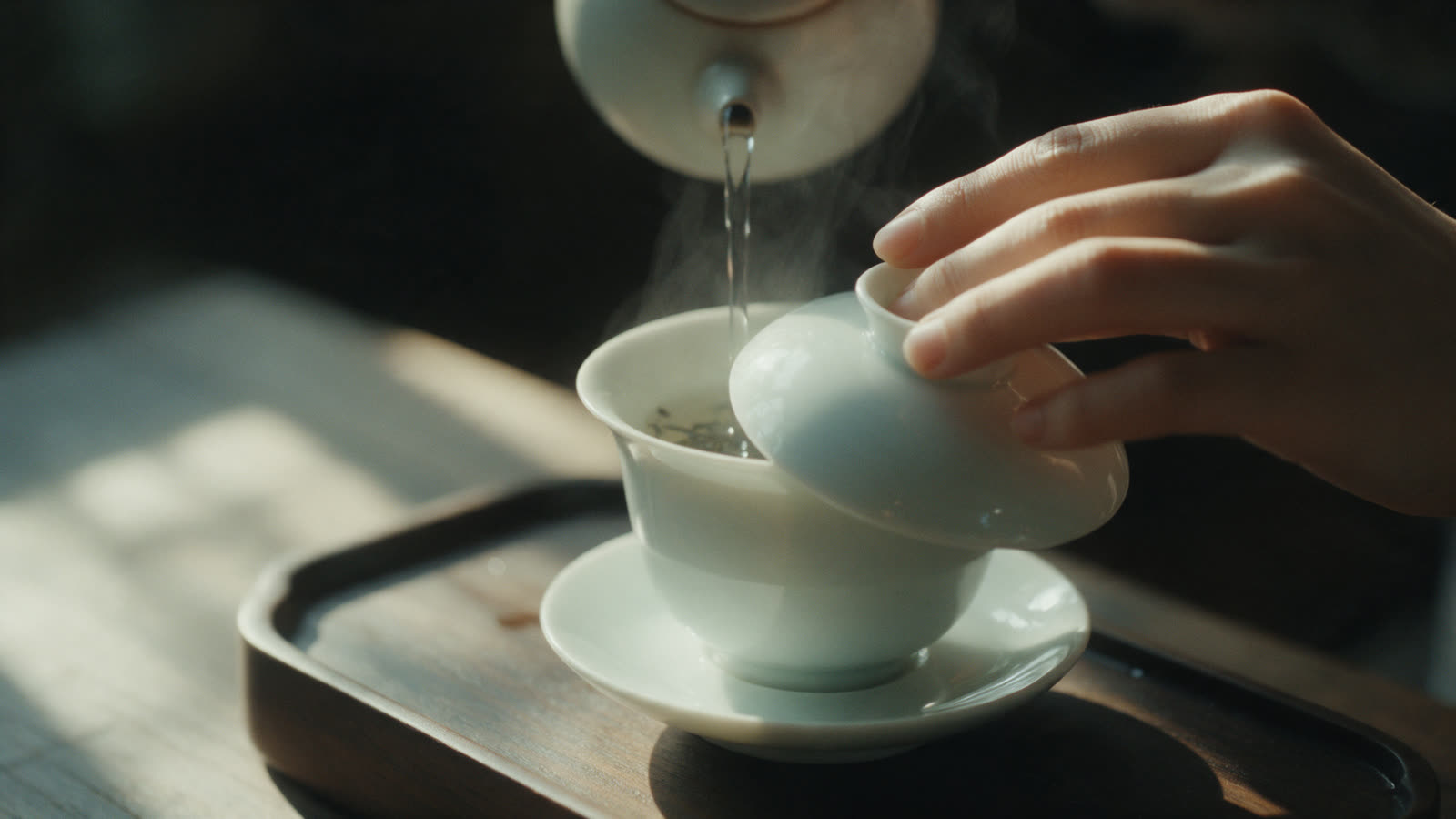
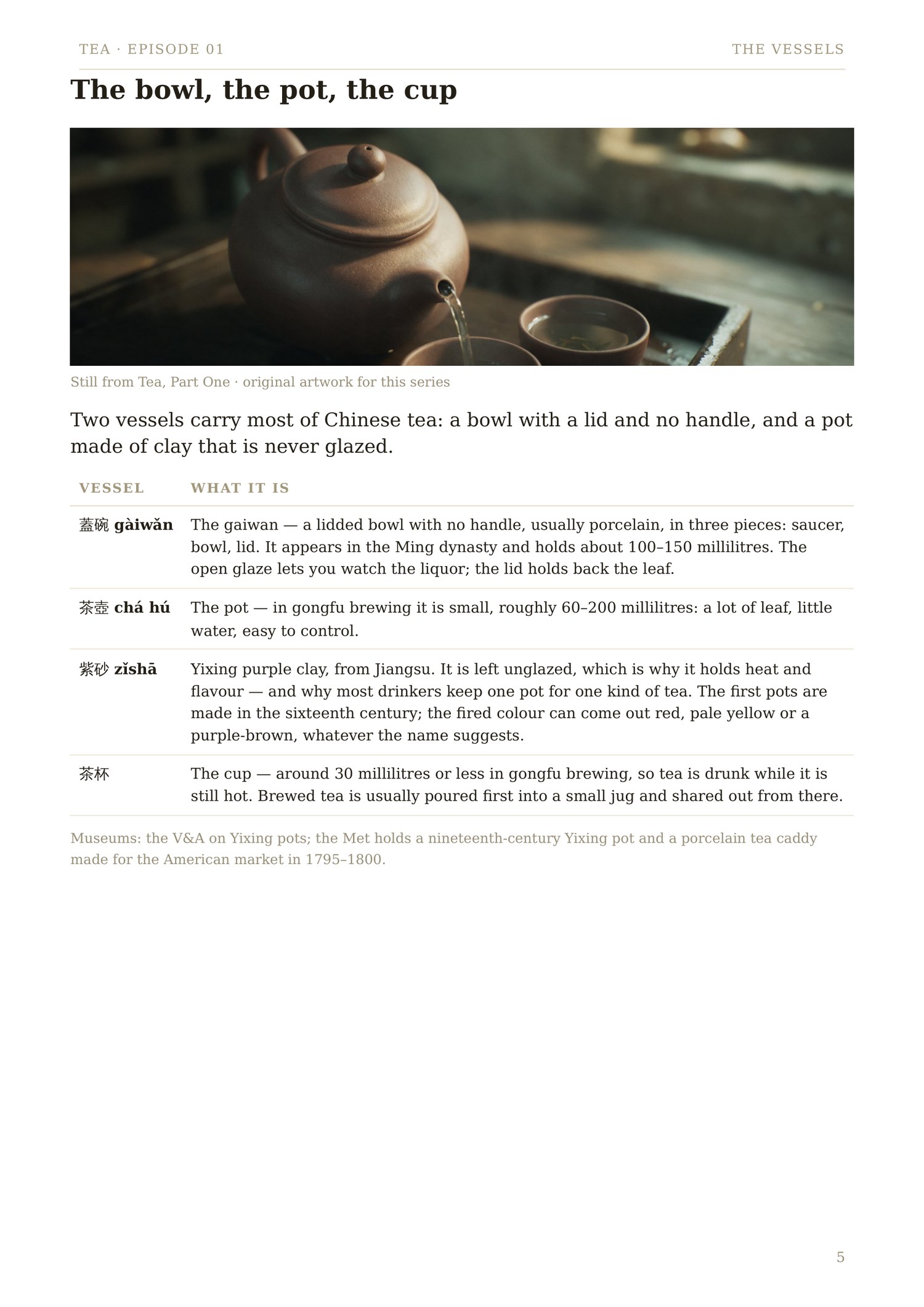
The gaiwan — a bowl with a lid, no handle, usually porcelain, about 100 to 150 millilitres — appears in the Ming dynasty. It is three pieces: saucer, bowl, lid. The glaze is open, so you can watch the liquor without it altering the taste, and the lid is used to hold the leaves back.
| Vessel | Chinese | Size | What it does |
|---|---|---|---|
| Gaiwan | 蓋碗 gàiwǎn | about 100–150 ml (some are 80 ml) | Three pieces — saucer, bowl, lid — and no handle. Porcelain, so you can watch the liquor without it changing the taste; the lid holds the leaves back. |
| Teapot | 茶壺 chá hú | about 60–200 ml in gongfu tea | Small pot, a lot of leaf, little water — the point is control. |
| Yixing pot | 宜興 Yíxīng · 紫砂 zǐshā | small, made for one kind of tea | Purple clay from Yixing in Jiangsu, first made in the sixteenth century, and deliberately unglazed. The clay takes on the flavour of the tea, so most drinkers keep one pot for one kind of tea. |
| Cup | — | about 30 ml or less | Small enough to drink in one go while it is still hot; tea is usually poured into a small fair-cup first. |
The Yixing pot is the opposite idea: purple clay from Jiangsu, first made in the sixteenth century, deliberately left unglazed, and prized for holding heat and flavour. It is called purple clay, but it fires to red, pale yellow or purple-brown.
Words from the films
| Chinese | Pinyin | English |
|---|---|---|
| 茶 | chá | tea |
| 蓋碗 | gàiwǎn | lidded tea bowl |
| 茶壺 | chá hú | teapot |
| 功夫茶 | gōngfu chá | the small-vessel way of brewing, generally believed to start around the eighteenth century |
| 宜興 · 紫砂 | Yíxīng · zǐshā | Yixing purple clay |
| 殺青 | shā qīng | kill-green — heat to stop oxidation |
| 萎凋 | wěidiāo | withering — the leaf rests and gives up water |
| 白茶 · 綠茶 · 黃茶 · 烏龍 · 紅茶 · 黑茶 | báichá · lǜchá · huángchá · wūlóng · hóngchá · hēichá | the six families |
| 岩茶 | yánchá | rock tea, from the Wuyi mountains |
| 餅茶 · 磚茶 · 沱茶 | bǐng chá · zhuān chá · tuó chá | cake, brick and bowl-shaped pressed tea |
| 茶館 | chá guǎn | teahouse |
| 點茶 | diǎn chá | whisked tea – the Song way of drinking it |
| 散茶 | sǎn chá | loose-leaf tea – from the Ming onward |
| 禪與茶 | chán yǔ chá | Chan and tea |
| 紫砂壺 | zǐ shā hú | the purple clay teapot |
| 婚禮茶 | hūn lǐ chá | wedding tea |
| 茶稅 | chá shuì | the tax on tea – 119% at one point |
| 館 | guǎn | a hall; here, a teahouse |
| 我去茶館 | wǒ qù chá guǎn | I go to the teahouse |
Questions
Is every kind of tea really from the same plant?
Yes. Green, white, yellow, oolong, red and dark tea all come from Camellia sinensis, a plant native to the highlands where China, Myanmar and India meet. The difference is entirely in how the leaf is treated afterwards.
What makes green tea green?
Heat. Kill-green — pan-firing or steaming — stops the enzyme that would otherwise turn the leaf brown, so the leaf keeps its colour. Heat-fixing the leaf goes back to the Han dynasty.
What is the difference between oxidation and fermentation in tea?
Oxidation is a chemical reaction with air, and it decides whether a tea ends up green, oolong or red. Dark tea works differently: it is fermented by micro-organisms, over months or years, which is why it is called post-fermented tea.
What is a gaiwan?
A bowl with a lid and a saucer — three pieces, no handle — made of porcelain. It appears in the Ming dynasty and usually holds about 100 to 150 millilitres. The lid doubles as a strainer for the leaves.
Do I need a different pot for every tea?
Many people keep one Yixing pot for one kind of tea. Yixing clay is unglazed, so it takes on the flavour of what is brewed in it.
Get the free booklet (w/ 12 cards)
Twelve pages, no charge: one plant and six teas, the five steps of the making, the gaiwan and the Yixing pot, and ten Chinese words from the film.
Peek inside
The first 5 pages preview, 20 pages in full.
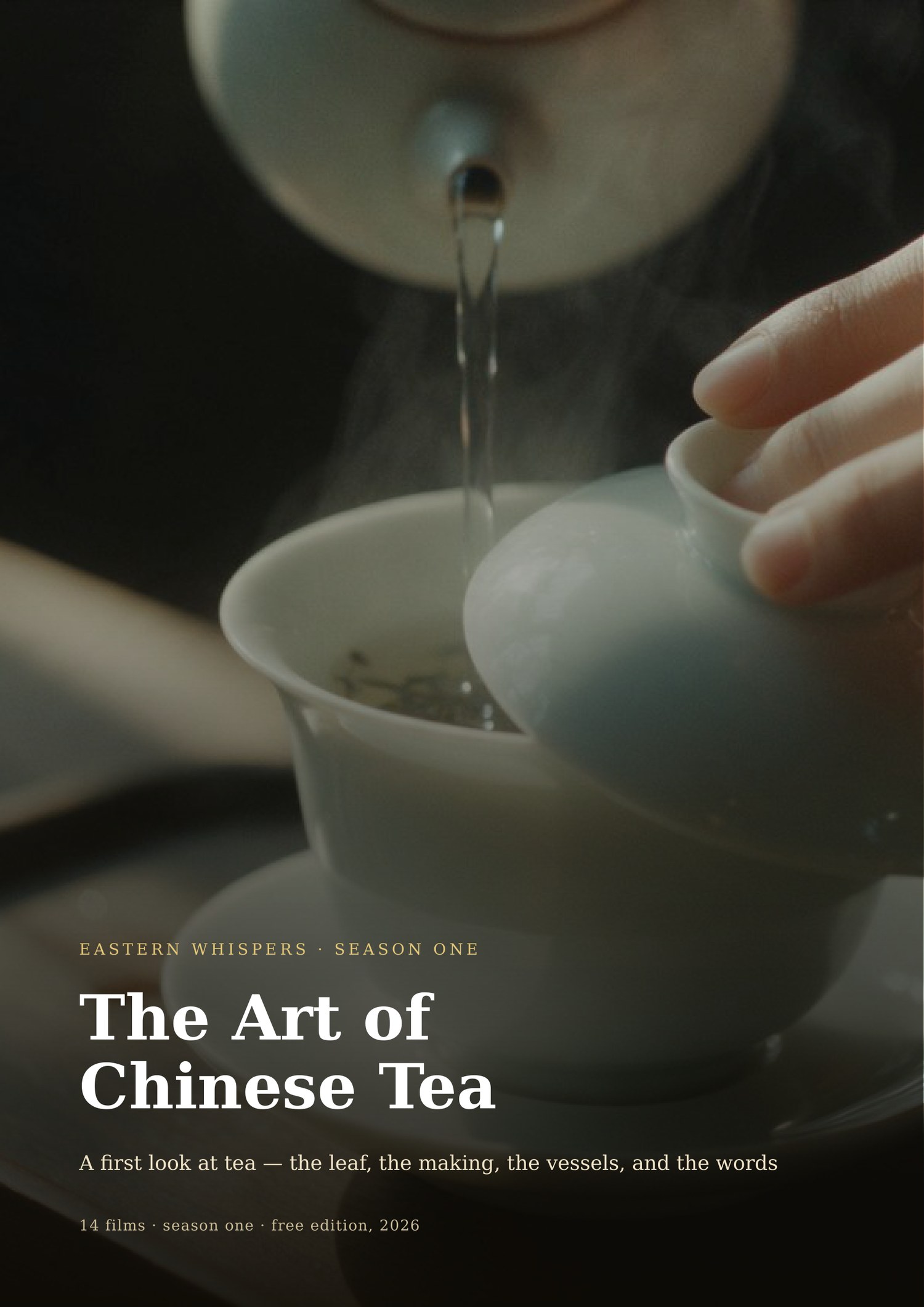
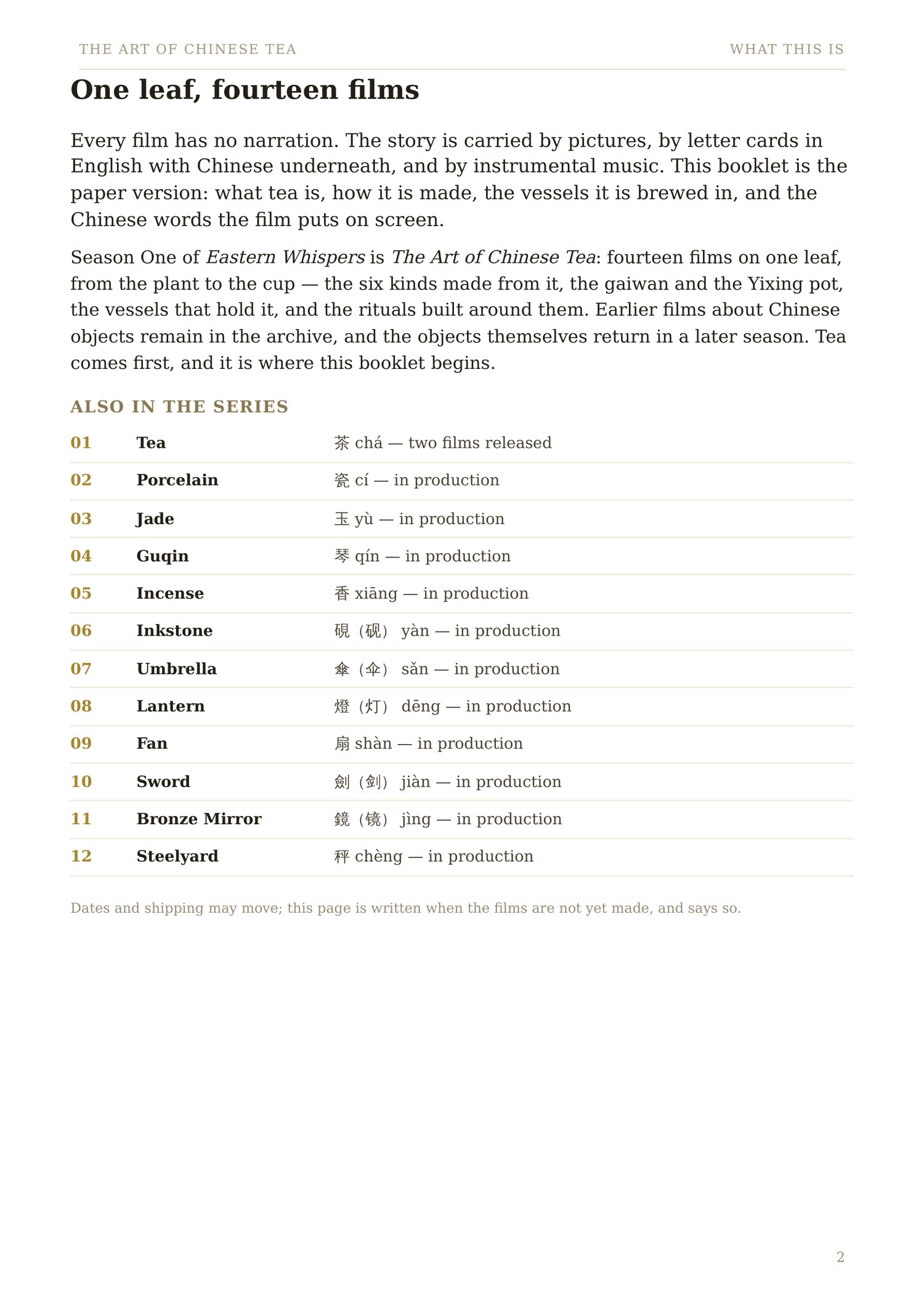
20 pagesChinese, with pinyinInstant PDFNo spam, unsubscribe anytime
Back to the season.
The facts on this page come from: UNESCO Intangible Cultural Heritage — traditional tea processing techniques in China (01884, 2022) · V&A — Purple Clay: Chinese teapots for scholarly tastes · The Met — Yixing teapot, nineteenth century · The Met — Chinese tea caddy made for the American market, 1795–1800. Where a fact could not be confirmed from an institution, we left it out.
Stills from the film. Credit notes for every image are on the image credits page.