
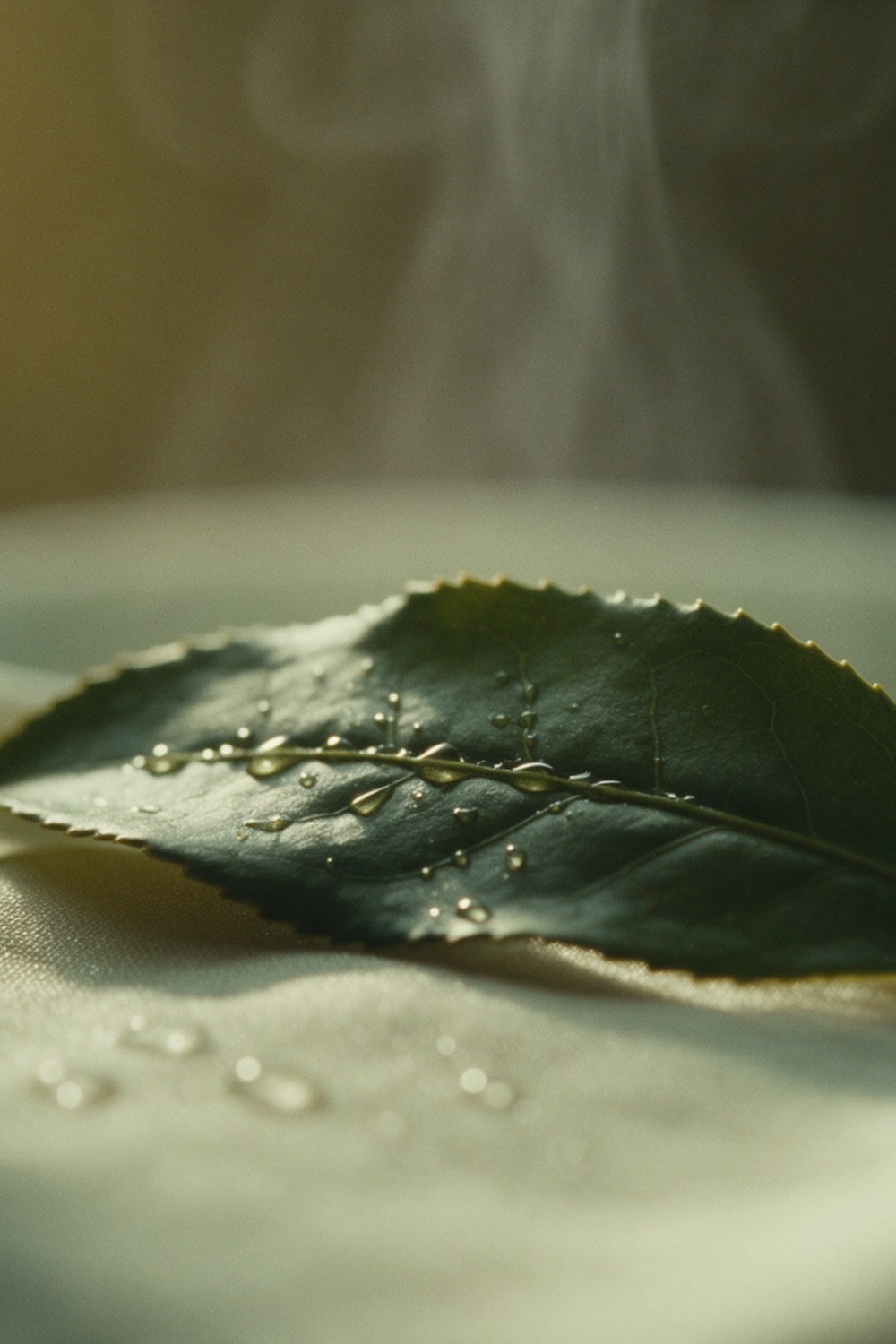
Every true tea on earth comes from one plant: Camellia sinensis, native to the highlands where south-west China, northern Myanmar and north-east India meet. Green, white, yellow, oolong, black and dark tea are not six plants. They are six decisions about what to do with the leaf after it is picked.
One plant, six teas
The six categories are the ones China put to UNESCO, which inscribed its traditional tea processing techniques in 2022. Together with reprocessed teas such as scented flower tea, the same species yields more than two thousand products, differing in colour, aroma, taste and shape. The list is short because the variables are few, and long because each variable has a range.
What actually changes the leaf
| Tea | Chinese | What makes it |
|---|---|---|
| White | 白茶 báichá | Picked and dried in the open air; the least oxidation of all |
| Green | 綠茶 lǔchá | Heated quickly to stop oxidation – the method is old enough to appear in Han times |
| Yellow | 黃茶 huángchá | The green process, plus a slow, covered yellowing step |
| Oolong | 烏龍 wūlóng | Partially oxidised, then pan-fired rather than steamed |
| Black | 紅茶 hóngchá | Fully oxidised before the leaf is heated and dried |
| Dark | 黑茶 hēichá | Microbial fermentation over months or years – pressed into cakes and bricks |
Read the table as a sequence rather than a chart. Oxidation is the hinge. Stop it at once and the leaf stays green. Let it run and it turns coppery and the flavour deepens. Let micro-organisms work instead of oxygen and you get dark tea: cakes, bricks and bowls of tea that are expected to change over years rather than months.
The counterintuitive part: red tea is black tea
Chinese names the tea after the liquor; English names it after the leaf. 紅茶 hóngchá is literally red tea, and the red is what you see in the cup. The same drink reaches English as black tea, because that is the colour of the oxidised leaf in the tin. Neither name is wrong. They are looking at different halves of the same thing.
The year the leaf stopped being pressed
For centuries the tea sent to the court was pressed into cakes – the wax-tea of the Northern Park kilns at Jian’ou in Fujian. In 1391 the Ming court ordered that tribute tea be sent as loose leaf instead. The pressed trade collapsed, production moved west to the Wuyi mountains, and the leaf-in-a-pot habit that most of the world now shares became the ordinary one.
The vessel is part of the tea
Chinese brewing is largely a matter of small volumes. The gaiwan, a three-piece bowl with a lid and a saucer that appears in the Ming, holds roughly 100 to 150 millilitres. Its lid holds the leaves back and its open glaze lets you watch the liquor without altering it. Yixing teapots, made from the unglazed purple clay of Jiangsu since the sixteenth century, are the opposite: they hold heat and take on the flavour of what is brewed in them, which is why most owners keep one pot to one kind of tea. Cups may hold 30 millilitres or less, so that a small pour is drunk while it is still hot.
What to look for in the cup
Much of the beauty is at the scale of the leaf. White tea carries a fine white down on the buds. Longjing is pressed flat, Biluochun curls, oolong keeps a long twisted shape. Dark tea is sculptural before it is ever brewed, pressed into cakes, bricks and bowl shapes. Then the liquor: pale gold for white, gold for a Tieguanyin, deep amber for a roasted oolong, near-black for a red tea.
Watch the film
This piece accompanies the film Tea – 茶, the first of the twelve objects in Season One.
Read next: The objects of Season One – tea, jade, porcelain, the guqin, incense and the rest – are on the The Art of Chinese Tea page.
Questions
Are black tea and green tea the same plant?
Yes. Every true tea comes from one species, Camellia sinensis. The difference is in how the leaf is treated after picking, not in the plant.
Why is black tea called red tea in Chinese?
Because the Chinese name describes the liquor in the cup, not the leaf. 紅茶 hóngchá means red tea, and refers to the coppery red of the brewed tea. English names it after the dark, oxidised leaf.
What is 殺青 shā qīng?
It is the step of heating the fresh leaves – by pan-firing or steaming – to stop oxidation almost as soon as it has begun. Green tea is built on this step.
The film, in words
Every caption card that appears on screen in the film, in order. The film has no narration – this is its full text, so it can be read and quoted.
Read the full text – 54 caption cards
- 2,000 kinds of tea. One plant.
- The leaf never changes. What happens to it does.
- Every true tea comes from one species — the tea plant.
- Its Chinese name is 茶 — chá.
- From the mountains where China, Myanmar and India meet.
- The plant is native to the highlands of the south-west.
- Farms in the high mountains are prized above all others.
- Zhejiang, Fujian, Yunnan, Hunan — each a different tea.
- Picking is done by hand, bud by bud.
- Only the youngest bud and the two leaves below it.
- The same field can be picked for green, white or oolong.
- For white tea, the fine white hairs are the mark of quality.
- White tea is the least processed of all.
- The leaf simply withers in open air, then dries.
- Withering: the leaves rest, and give up their water.
- In Chinese: 萎凋, wěidiāo.
- Soft leaf, ready for the fire.
- Now the heat. This step has a name: kill-green.
- Heat stops the leaf from turning brown.
- In Chinese: 殺青, shā qīng.
- Stop it early, and you keep a green tea.
- This method is not new.
- Heat-fixing the leaf goes back to the Han dynasty —
- 206 BC to AD 220. Two thousand years.
- Then the hands work the leaf.
- Rolling twists it into strips and presses out the juice.
- Flat, curled, or rolled into a ball —
- Longjing is flat. Biluochun is curled like a snail.
- Here is the real fork in the road.
- Leave the leaf alone, and it turns red. That is oxidation.
- Stop it early: green. Let it go halfway: oolong.
- Let it finish: red.
- Finally, fire.
- Roasting over charcoal gives the deeper, warmer notes.
- The Wuyi mountains in Fujian are famous for it.
- Their teas are called rock teas — 岩茶, yánchá.
- Green, yellow, white, oolong, red, dark.
- Six families, from one leaf —
- and more than 2,000 kinds of tea in China.
- Look at the colour of the liquor, not the leaf.
- Chinese calls black tea 紅茶 — "red tea".
- Named after what you see in the cup.
- Dark tea is different again: it ferments, for months or years.
- On the road west, tea travelled as pressed cakes.
- Cake tea, brick tea: 餅茶, 磚茶.
- In the Ming dynasty came the gaiwan —
- a bowl with a lid and no handle. Saucer, bowl, lid.
- 100 to 150 millilitres, usually porcelain.
- And there is a pot that is never glazed.
- Purple clay, from Yixing: 紫砂, zǐshā.
- It keeps the heat — and holds the taste of the tea.
- So most drinkers keep one pot for one kind of tea.
- One plant. Six ways. Two thousand names.
- So the next time you drink tea, you'll know what you are drinking.
Twelve free pages on the same material – one plant, six teas, the vessels, and ten Chinese words from the film – are in The Art of Chinese Tea: A First Look.
Sources
- UNESCO Intangible Cultural Heritage – Traditional tea processing techniques and associated social practices in China (No. 01884, inscribed 2022)
- Victoria and Albert Museum – Purple Clay: Chinese teapots for scholarly tastes
- The Metropolitan Museum of Art – Yixing teapot, Qing dynasty (44.39.1a,b)
The films and the music are AI-assisted and then chosen, written and cut by hand. Nothing on this page is invented: every claim above is drawn from the sources listed, and anything we could not confirm has been left out.
Written and published by Eastern Whispers — how this site researches, and how it discloses its sources