
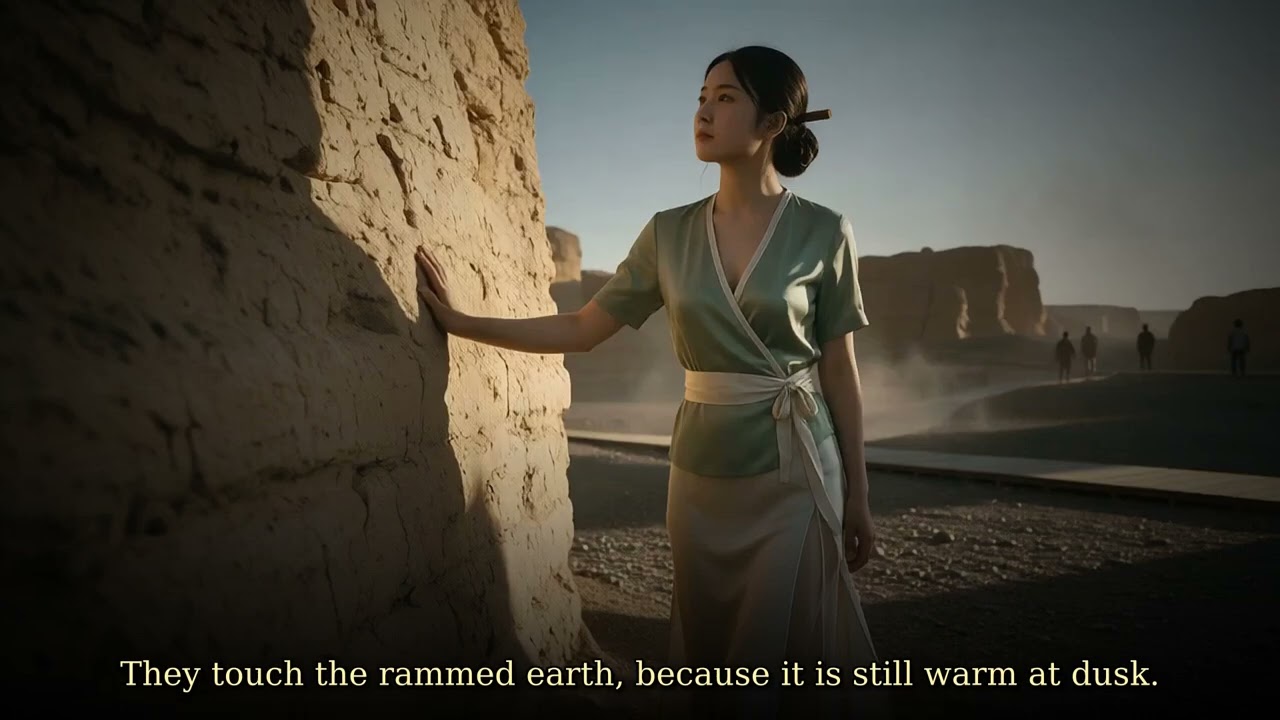
The Silk Road(絲綢之路 sīchóu zhī lù) was not a road and not a single journey. Goods moved through a network of trading posts, sold on from one merchant to the next, and carried overland by pack animals – above all by the Bactrian camel(駱駝 luòtuo).[1]
A network, not a route
The Met’s account of the trade describes a vast network of strategically located trading posts that enabled the exchange, distribution and storage of goods. Over land, transport was done with river craft and pack animals, notably the sturdy Bactrian camel; by sea, it depended on the monsoon winds of the Indian Ocean.[1]
Five powers, one system
By the end of the first century BC, international trade involved five contiguous powers: the Roman empire, the Parthian empire, the Kushan empire, the nomadic confederation of the Xiongnu, and the Han empire. Contacts between them spread ideas and beliefs as well as goods, through trade, exchange, gift giving and tribute.[1]
The middlemen who made it work
The professional traders of the first millennium were largely Sogdians(粟特 Sùtè), from the region around Samarkand and Bukhara in Central Asia – described in modern scholarship as the most famous merchants of the Silk Road, and present in China from at least the fourth century. They were the messengers of cultural transmission, standing at the crossroads between east and west.{c3}
Why silk arrived expensive
Because every stage added a price and a risk. A merchant who bought in Chang’an did not travel to Samarkand, and a merchant in Samarkand did not travel to Rome: the goods were sold on at each remove, so that what arrived at the far end carried the cost of every hand it had passed through.[1][2]
The sea as well as the land
Overland traffic was only half of it. The same network reached the sea: routes linked the ports of South Arabia and Somalia with the Persian Gulf and India, and on to the Red Sea, from which goods were carried overland to the Nile and down to Alexandria. Sea travel depended on the monsoon winds of the Indian Ocean, which blow from the south-west in the summer and from the north-east in the autumn.{c1}
Watch the film
This piece accompanies the film Caravan.
Read next: how big the Tang capital was, and the Jade Gate, the last post before the desert. The full route is set out on the Prelude: The Silk Road page.
Chinese words in this piece
- 絲綢之路 sīchóu zhī lù — the Silk Road
- 駱駝 luòtuo — the Bactrian camel, the pack animal of the overland route
- 粟特 Sùtè — the Sogdians, the merchants of Samarkand and Bukhara
- 撒馬爾罕 Sāmǎ’ěrhǎn — Samarkand, the Sogdian trading city
Questions
Did one merchant travel the whole route?
No. Goods were sold on from one trader to the next at the trading posts and oasis towns along the way, so the price rose at every stage.
What animal carried the goods?
The Bactrian camel, the pack animal the Met’s account of the trade names as the mainstay of overland transport.
Who were the Sogdians?
Central Asian merchants from the region of Samarkand and Bukhara, described in modern scholarship as the most famous traders of the Silk Road and present in China from at least the fourth century.
The film, in words
Every caption card that appears on screen in the film, in order. The film has no narration – this is its full text, so it can be read and quoted.
Read the full text – 48 caption cards
- Before sunrise the courtyard is already working.
- Silk bales weighed on a beam scale, one against the other.
- Camels kneel in a row and wait to be loaded.
- Bells are knotted onto the front animals, so the line can be heard.
- A caravan is not an adventure. It is a business with hooves.
- A camel carries two hundred kilos and drinks a hundred litres at once.
- Between stops, nothing is bought. Everything is carried.
- At each oasis the goods are sold on to somebody new.
- The merchant who bought in Chang'an never saw Samarkand.
- The merchant in Samarkand never saw Rome.
- Silk changed hands at every stage — twenty owners before Rome.
- Each one added a price and took a risk.
- That is why silk arrived expensive, and why nobody apologised for it.
- Some middlemen spoke four languages and belonged to none.
- They were the ones the road actually ran on.
- By night the line reaches an inn with a walled courtyard.
- Flatbread is torn and passed; tea is poured three times from a height.
- A sandal is stitched with a bone needle by lamplight.
- The camels fold down and chew, and are quiet about everything.
- Here every language shares the same three words: water, price, sleep.
- Trade needed no common tongue. It needed gestures and counting.
- Then the crossing. The desert does not negotiate.
- A wall of sand stands up on the horizon and walks toward you.
- Ropes must be checked again, or a camel is simply gone.
- Water is rationed to one cup at a time.
- The cup goes down the line, and comes back almost untouched.
- Everyone drinks last, so that everyone drinks.
- Then the wind drops, and the sand settles like it was never moving.
- The tracks are half erased. The line walks on.
- Camel bells were the first long-distance signal system.
- You heard the trade before you saw it.
- A night camp under stars, and one man awake with a spear.
- He is not guarding the silk. He is guarding the animals.
- Without camels, the silk is only cloth.
- This is the least romantic part of the Silk Road: logistics.
- And logistics is what actually moved the world.
- Today the same relay runs on rails.
- Forty wagons carry what forty camels did, in a single morning.
- At the coast, cranes lift the bales without touching them.
- The price still rises at every stage. That never changed.
- Neither did the risk, or the people who carry it.
- A driver in a cab is the descendant of a cameleer.
- Goods still pass through many hands that never meet.
- That is what the Silk Road really was: a chain of strangers.
- Each link trusted the next one just enough.
- Trust, at long distance, was the real cargo.
- The camels are gone from the road. The relay is not.
- Somewhere tonight, a bell and a horn are doing the same job.
Twelve free pages on the objects of China – and ten Chinese words from the films – are in The Art of Chinese Tea: A First Look.
Sources
- [1] Trade between the Romans and the Empires of Asia – The Met, Heilbrunn Timeline of Art History
- [2] From Samarkand to Chang’an: Sogdian cultural identity in the Tang dynasty – University of Nottingham
The films and the music are AI-assisted and then chosen, written and cut by hand. Every claim above is drawn from the sources listed; anything we could not confirm has been left out.
Written and published by Eastern Whispers — how this site researches, and how it discloses its sources