
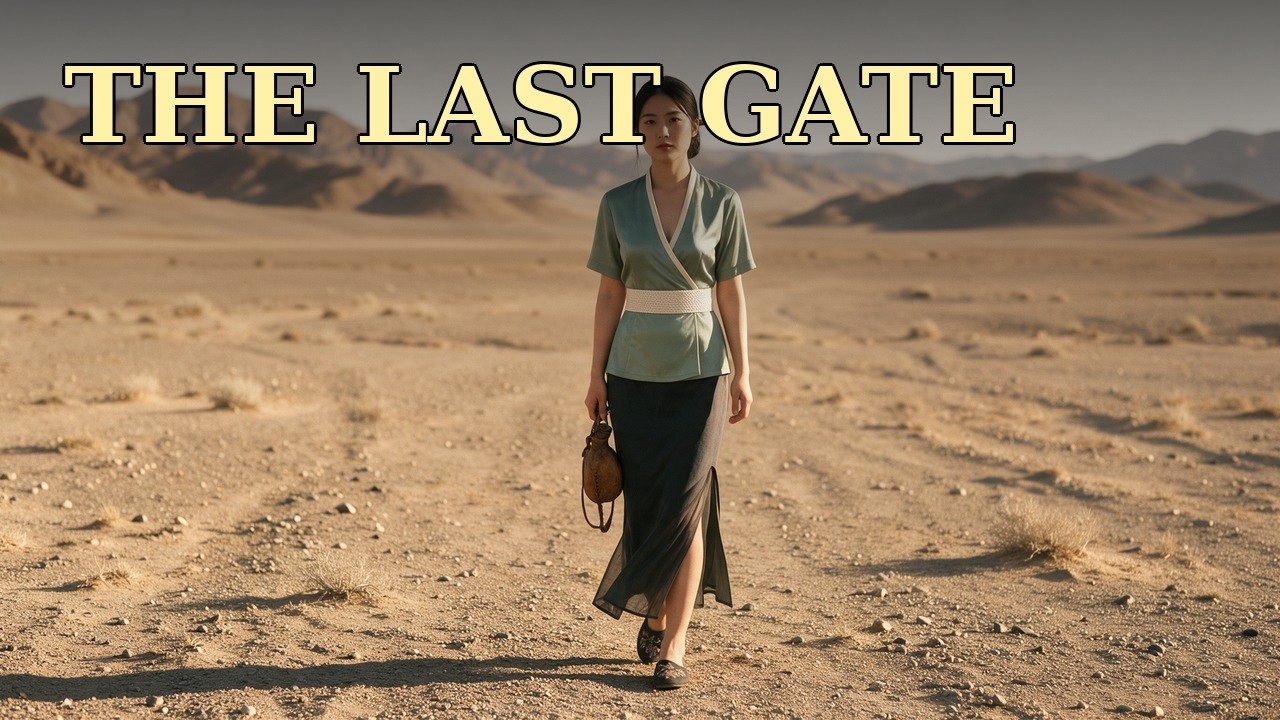
The Jade Gate(玉門關 Yùmén Guān) is the popular name for Yumen, one of two Han-dynasty frontier posts west of Dunhuang(敦煌 Dūnhuáng). Together with Yangguan(陽關 Yángguān) to the south, it formed the western end of the Great Wall and the last Chinese territory a caravan saw before the desert.[1][2]
Two gates, one road
Yumenguan lies about 80 kilometres north-west of Dunhuang; Yangguan sits about 70 kilometres to the south-west. The two gate sites are roughly 68 kilometres apart, at either end of the Dunhuang extension of the Great Wall, and until the Tang dynasty every caravan travelling through Dunhuang was required to pass through one of them.[1]
Why it was called the Jade Gate
Because of what came through it. The great jade caravans from Khotan entered China by this route, and the pass took its name from them. The original gate was erected by Emperor Wudi soon after 121 BC; the ruins still stand, a square enclosure of rammed earth with walls about ten metres high.[1]
What the documents say
This was an administrative frontier, not only a fort. In 1907 the archaeologist Aurel Stein found bamboo slips at the site bearing the name Yumenguan, and Chinese archaeologists confirmed the identification in 1944 – the paperwork of a frontier post that wrote travellers into a record.[1]
The poem everyone knows
Most Chinese readers know the pass from a Tang poem rather than from history. Wang Wei’s farewell to a friend bound for Anxi ends on the line that the traveller will see no more old friends west of Yangguan – which is why the two gates became, and remain, the country’s shorthand for leaving home.[2]
What is left
The walls of Yumen still stand in the Gobi; Yangguan is reduced to a single broken beacon tower, its walls eroded and buried. Wind has been working on both for two thousand years, and by the sixth century, as caravans preferred the northern route via Hami, the pass was abandoned.[1][2]
Four commanderies and two passes
The two gates were not built one at a time. Dunhuang Commandery was established in 111 BC, and the two passes were built in the same period as part of a single frontier arrangement – what the records call four commanderies and two passes, with the Great Wall running between them. Each gate was also the seat of a garrison: this was a controlled border, not an open desert.{c2}
Watch the film
This piece accompanies the film The Jade Gate.
Read next: the envoy who first walked out through it, and how goods actually moved along the route. The full route is set out on the Prelude: The Silk Road page.
Chinese words in this piece
- 玉門關 Yùmén Guān — the Jade Gate, north-west of Dunhuang
- 陽關 Yángguān — the Yang Pass, on the southern route
- 敦煌 Dūnhuáng — Dunhuang, the oasis town that served both gates
- 長城 chángchéng — the Great Wall – here a line of rammed earth and beacon towers
Questions
Where is the Jade Gate?
About 80 kilometres north-west of Dunhuang in Gansu, at the western end of the Hexi corridor. Its partner pass, Yangguan, lies about 70 kilometres south-west of the city.
Why is it called the Jade Gate?
Because the jade caravans from Khotan entered China through it. The Chinese name is Yumen – yǔ (jade) and men (gate).
Does anything remain?
Yes. Yumen survives as a square enclosure of rammed earth with walls about ten metres high; of Yangguan only a broken beacon tower is left.
The film, in words
Every caption card that appears on screen in the film, in order. The film has no narration – this is its full text, so it can be read and quoted.
Read the full text – 48 caption cards
- Two hundred kilometres of wall to the east, and this is where it stops.
- Two low forts of rammed earth, side by side in the sand.
- Yumen — the Jade Gate — named for the stone that came through it.
- Before dawn the caravan queues, and the pennants lift.
- Every traveller needs papers: a wooden slip with a name on it.
- The clerk grinds ink, presses a seal, and writes you into the record.
- Bundles are opened and retied. Nothing is wasted, nothing is hidden.
- A monk's staff, a merchant's scales, a soldier's bow.
- The wall is a line. A gate is a decision.
- Outside, at the last tavern, friends drink before the crossing.
- The cup is filled a second time, then a third.
- One of them is a poet, and he says the line aloud.
- Drink one more cup, my friend — west of Yang Pass, no old friends.
- It is not a farewell speech. It is just what is true.
- Then the walk: twenty paces of shadow under the gate.
- And the hinge sound behind you, closing on the world you knew.
- Beyond the gate: no wall, no fields, no inn.
- Gravel, salt crust, and a horizon with no edge.
- The map stops making promises here.
- Water is counted. Shade is a luxury.
- Some who passed were merchants, chasing a price.
- Some were monks, carrying a translation nobody had made yet.
- Some were soldiers, posted where the wall ends.
- And some were sent away, and did not choose it.
- The gate treated them all the same way: it let them go.
- Wind has been working on these walls for two thousand years.
- It has taken the timber, the plaster, the roofs.
- What is left is earth, and the shape of a doorway.
- Today a boardwalk crosses the same gravel.
- Visitors stand where the queue once stood.
- They touch the rammed earth, because it is still warm at dusk.
- The poem is still said aloud. People still pour the third cup.
- Distance has changed. Thresholds have not.
- Everyone who has ever left home knows this gate.
- The last look back is always at something small.
- A cup, a sleeve, a chimney going quiet.
- Then you face forward, because that is the only direction.
- The desert does not care how brave you feel.
- It only asks whether you brought water.
- That is why the road made people honest.
- Long roads strip a person down to essentials.
- And essentials travel light.
- The Jade Gate kept the jade, the silk and the names.
- It kept the leaving, too.
- Two forts in the sand, side by side, still facing west.
- Whatever you are carrying, the road is waiting.
- Say goodbye properly. It is the last warm thing.
- Then walk through, and do not turn around twice.
Twelve free pages on the objects of China – and ten Chinese words from the films – are in The Art of Chinese Tea: A First Look.
Sources
- [1] Yumen Pass (Jade Gate) – China Culture (Ministry of Culture)
- [2] Yangguan Pass – China Daily (Gansu)
The films and the music are AI-assisted and then chosen, written and cut by hand. Every claim above is drawn from the sources listed; anything we could not confirm has been left out.
Written and published by Eastern Whispers — how this site researches, and how it discloses its sources