
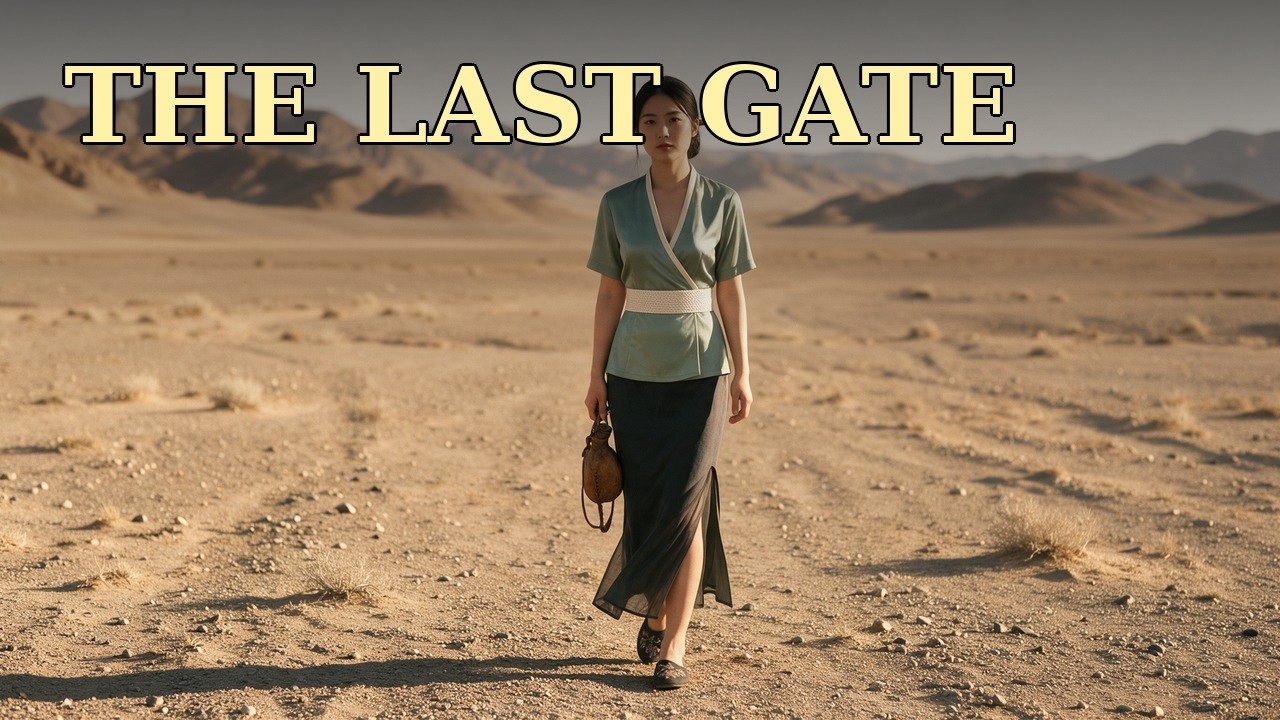
Silk was the most famous thing to leave China along the trade routes, but not the most consequential. Paper, printing and gunpowder travelled the same roads, and they changed the societies that received them.[1]
Printing, and the oldest printed book
Woodblock printing is first mentioned in literature around 835 and the technique was perfected soon after. The earliest surviving printed book is an illustrated scroll of the Diamond Sutra, printed on paper and unearthed at Dunhuang, on the eastern end of the trade routes.[1]
The material underneath
Printing needs something to print on. Paper is made from plant fibre and water, which means it can be produced almost anywhere there is a stream and a crop – and that is why a printed book could be made in quantity and carried in a saddlebag.[1]
Powder, and what it was first for
Gunpowder – black powder – is generally held to have originated in China around the tenth century, where for a long time it was used almost exclusively for fireworks and signals rather than weapons. Its recipe is saltpetre, sulfur and charcoal, and a recipe is portable knowledge: by 1300 Arab forces had developed the first real gun. The interesting question for the road is not who had it first, but how fast a formula crosses a continent once somebody writes it down.[2]
The pattern behind all three
None of them travelled as a gift, and none stayed a secret for long. They moved with the people who used them – artisans, monks, soldiers, merchants – along a route that had no single owner and no single direction. The Silk Road’s most durable export was capability.[1][2]
This piece accompanies the film Paper and Powder.
Read next: how silk was made, step by step, and when the route became a railway The film that goes with this piece is Paper and Powder.
Chinese words in this piece
- 造紙 zàozhǐ — papermaking
- 印刷 yìnshuā — printing
- 火藥 huǒyào — gunpowder, literally ‘fire medicine’
- 金剛經 Jīngāng Jīng — the Diamond Sutra, the earliest surviving printed book
Questions
What is the oldest surviving printed book?
An illustrated scroll of the Diamond Sutra, printed by woodblock, found at Dunhuang.
Which inventions travelled west from China?
Among them paper, printing and gunpowder – all of which moved along the trade routes that carried silk.
Why was paper so important?
It is made from fibre and water, so it could be produced cheaply almost anywhere. That reduced the cost of keeping any written record at all.
The film, in words
Every caption card that appears on screen in the film, in order. The film has no narration – this is its full text, so it can be read and quoted.
Read the full text – 48 caption cards
- Before paper, a message was written on silk or bamboo.
- Both were costly, heavy, or too precious to spare.
- Then someone beat bark and rags into a soft pulp.
- The mixture sank in a vat of cloudy water.
- A mould was dipped, lifted, and shaken gently.
- Water drained through the screen and left a thin skin of fibre.
- The sheet was pressed, then dried on a warm wall.
- It came off in one piece, light as a fallen leaf.
- Cai Lun's name is remembered, though the craft is older.
- Writing by hand was slow, and copies drifted apart.
- By the eighth century, whole pages were cut into wood.
- A carver worked the block in mirror image, backwards.
- Ink was rolled on, even and thin across the raised strokes.
- Paper was laid down and brushed flat with a soft pad.
- One pull, and the page no longer read backwards.
- A thousand copies could come from one cut block.
- The workshop smelled of ink, damp paper and pine smoke.
- Cheap books changed who was allowed to know things.
- One page was left to dry in the shade.
- Water leaving the fibre made the paper tighten and hum.
- You could see the bark in it, if you looked closely.
- One fibre crossed over another fibre, and they held.
- Handmade paper keeps a direction, like a piece of wood.
- A brush touched the damp edge only once.
- Too much water and the sheet would tear at the corner.
- Too little, and the ink would sit on top and flake.
- The printer judged it by touch alone, not by instrument.
- His hands were stained a permanent grey-blue that never washed off.
- A mistake was scraped away while the paper was still soft.
- Every sheet was slightly different, and that was normal.
- By morning the page was flat, dry and slightly curled.
- It smelled faintly of lime, smoke and clean water.
- Something that began as rags now held a sentence.
- In 751, two armies met near the Talas river.
- Among the prisoners taken west were men who made paper.
- Paper mills opened in Samarkand, and then in Baghdad.
- In Baghdad, paper replaced papyrus and parchment for records.
- Centuries later, printing reached Europe along the same road.
- Gunpowder travelled too, first as a fire-lance and a firework.
- For a long time it was mostly a signal, not a weapon.
- Only later did it become the artillery that reshaped war.
- Three inventions left home quietly and never came back.
- Today paper is everywhere, and we stop seeing it.
- Printing is in every book, ticket and package.
- A lab tests old paper to learn how to keep it longer.
- The debt runs east along that road, still unpaid.
- Something soft and cheap taught the world to read.
- Every page you hold came down that long road.
Twelve free pages on the objects of China – and ten Chinese words from the films – are in The Art of Chinese Tea: A First Look.
Sources
- [1] China, 500-1000 A.D. – The Met, Heilbrunn Timeline of Art History
- [2] Gunpowder – Encyclopaedia Britannica
The films and the music are AI-assisted and then chosen, written and cut by hand. Every claim above is drawn from the sources listed; anything we could not confirm has been left out.
Written and published by Eastern Whispers — how this site researches, and how it discloses its sources