
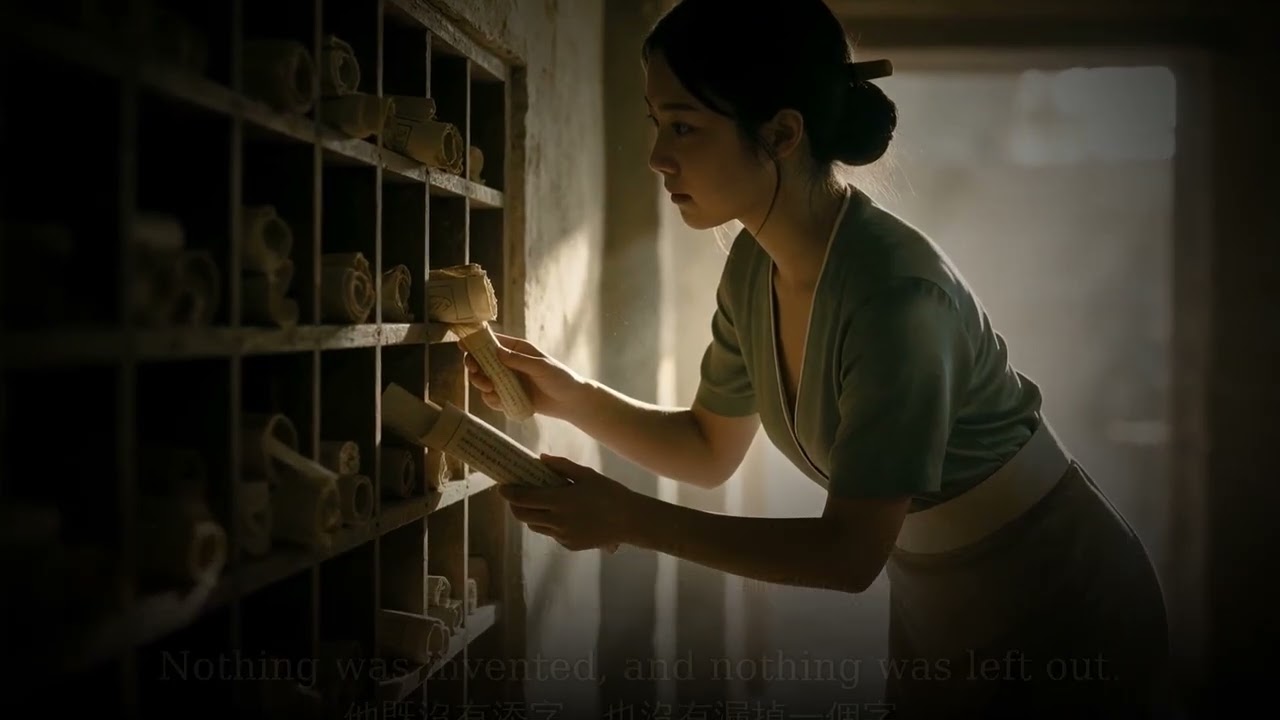
Buddhism spread across Asia through the networks of overland and maritime routes that linked India, Central Asia and China – the same routes that carried silk. Its transmission followed the development of the silk routes as channels for exchange.[1]
The route came first
Trade and faith travelled together. Trade goods moved up the Indus and on to Gandhara, then toward China either through Afghanistan or across the high Himalayan passes, and from there through Central Asia. Monasteries grew up along exactly that line.[2][1]
Monasteries at the oases
Once a Buddhist community was established in the Chinese capital at Luoyang in the second century AD, monasteries appeared near the irrigated oases on the northern and southern branches of the route – at Khotan, Kucha, Turfan and Dunhuang. Those oasis monasteries became the relay points through which the religion moved east.[1]
Carried by people whose names are lost
The transmission at the level below the court was the work of foreign monks who travelled between India and China: unknown, largely anonymous, and essential. The Met’s account of the period describes a network of Buddhist communities linking North India, Kashmir and Gandhara, financed by the trade that flowed through the passes, and it notes that the movement of monks, traders and nomadic people both carried the ideas and paid for the art that expressed them.[1]
What was actually built
Art, mostly. The exchange financed the production of Buddhist imagery of great sophistication, and the caves at Dunhuang are its largest surviving monument: wall paintings and sculpture made over a thousand years by people arriving from the west and settling into the oases.[3]
Why the road mattered
Because faith needs a carrier. Customs, texts, images and languages moved along the same tracks as goods, at the same speed, in the same hands – which is why the history of Buddhism in China is, for its first centuries, a history of trade routes.[1][2]
Watch the film
This piece accompanies the film The Road of Faith.
Read next: what is inside the caves at Dunhuang, and who first walked the route west The film that goes with this piece is The Road of Faith.
Chinese words in this piece
- 佛教 Fójiào — Buddhism
- 僧人 sēngrén — monk
- 敦煌 Dūnhuáng — Dunhuang, where the largest surviving body of this art is found
- 譯經 yìjīng — the translation of scriptures – the work that made the faith Chinese
Questions
When did Buddhism reach China?
Traders and monks travelled between China, Central Asia and India from the second century BC onward, and a Buddhist community was established in the capital at Luoyang by the second century AD.
Who carried Buddhism to China?
Largely anonymous foreign monks travelling the trade routes, alongside merchants; the monasteries they founded sat at the oasis towns of Khotan, Kucha, Turfan and Dunhuang.
Did the sea route matter too?
Yes. Buddhism spread through maritime as well as overland networks – the same routes that carried goods between India, Southeast Asia, Central Asia and China.
The film, in words
Every caption card that appears on screen in the film, in order. The film has no narration – this is its full text, so it can be read and quoted.
Read the full text – 48 caption cards
- Some cargo is carried by hand, and some is carried by heart.
- Long before the caravans, monks were already walking east.
- They carried no silk, only bundles of palm-leaf and paper.
- The road west was a road east for ideas.
- A monk walked for years with one bundle on his back.
- Dust, hunger and cold were part of the scripture.
- He could not read most of the languages he crossed.
- But the syllables had to arrive exactly as written.
- So the words travelled carefully, wrapped against rain and sand.
- At the far end of the road, a translation room waited.
- Two languages sat across a table, and neither was complete.
- Kumarajiva's school gathered scholars to render one word at a time.
- Meaning first, then music, then the exact shape of the sentence.
- Hundreds of years later, Xuanzang walked west himself.
- He left in 629 and returned in 645 with cartloads of manuscripts.
- A word can change a religion, so translators argued for years.
- What survived was the version that read best aloud.
- Nothing was invented, and nothing was left out.
- At night the work was only a lamp and a brush.
- Ink was ground slowly until it shone like oil.
- Each character took the same care as the one before.
- The copyist did not add, and did not omit.
- A single wrong stroke could change a whole teaching.
- Paper arrived from the west of China, thin and strong.
- One page came back damaged from the long road.
- A torn edge was laid flat and pressed with silk.
- The missing words were copied again from another scroll.
- Fingers held the paper down against the smallest breath of wind.
- The lamp was trimmed so the flame would not smoke the ink.
- Outside, sand moved across the courtyard all night.
- By dawn there were twelve new lines and one repaired page.
- No one would ever know which hand wrote which line.
- The text belonged to no one, and therefore to everyone.
- Where the road crossed water, a monastery was built.
- Merchants paid for the caves, hoping for a safe return.
- Painters covered the walls with travellers and kings.
- At Dunhuang, monks painted and copied for a thousand years.
- When danger came, they carried the manuscripts into a cave.
- Scrolls were stacked and sealed behind brick, and the door closed.
- For nine hundred years, no one opened that small room.
- In 1900, a caretaker clearing sand found the wall hollow.
- Tens of thousands of manuscripts lay inside, waiting.
- Today those scrolls rest in a conservation lab.
- Gloved hands lift a page untouched for centuries.
- Humidity is measured, and the light is kept low.
- A tear is mended with wheat paste and a fine brush.
- The faith that arrived as cargo stayed as culture.
- Every copied line was a decision to carry it further.
Twelve free pages on the objects of China – and ten Chinese words from the films – are in The Art of Chinese Tea: A First Look.
Sources
- [1] Buddhism on the Silk Routes – University of Washington, Silk Road Project
- [2] Buddhism along the Silk Road – The Metropolitan Museum of Art
- [3] Mogao Caves – UNESCO World Heritage Centre
The films and the music are AI-assisted and then chosen, written and cut by hand. Every claim above is drawn from the sources listed; anything we could not confirm has been left out.
Written and published by Eastern Whispers — how this site researches, and how it discloses its sources