
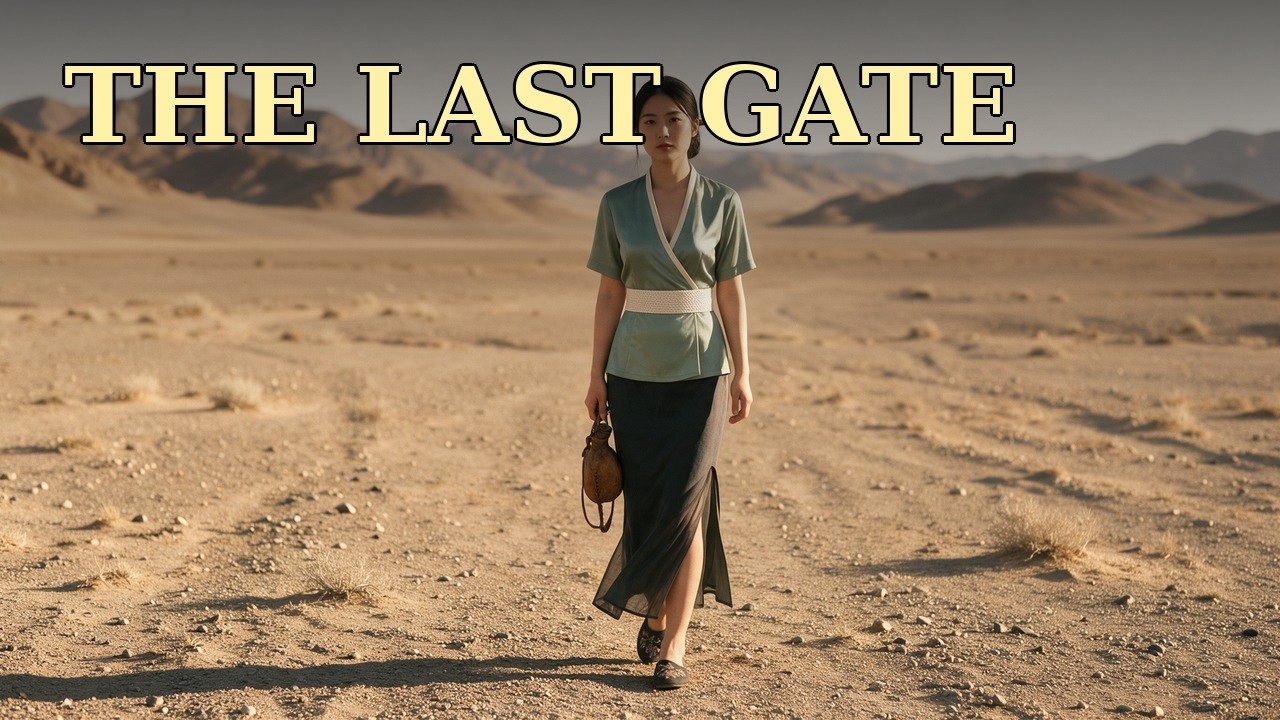
The Silk Road as a trade system ended: as shipping routes supplanted the overland tracks, China abandoned the road and the settlements along it were left to decline.[1] The corridor itself, however, never disappeared – the passes and oases were always the only practical way across the continent, and they are in use again.[2][3]
What ended and what did not
What ended was the camel traffic and the economy built around it: the caravanserais, the toll towns, the patronage that paid for the cave paintings. What did not end was the geography – the mountains, the deserts and the handful of watered places where a road across Asia can run.[1][2]
The corridor rebuilt
The modern version is steel and asphalt: a rail corridor from the Pacific coast of China to Europe, worked on by the UN’s regional bodies as a single connected system of track, road and border crossings. The track between China and Europe was in place before 2011, but scheduled freight services did not run, because rail could not compete on cost.[2][3]
The same two questions as before
Every argument about the route today was had two thousand years ago. Is it cheaper than the sea? The answer decides whether goods move at all. Who controls the passes, and what do they charge? That answer decides where the money ends up. And what travels besides cargo – people, beliefs, techniques? That answer decides what the corridor leaves behind.[3][4]
Why we call it a story rather than a road
Because the thing that lasted is not the track. The fabric, the paper, the printed scroll, the Buddhist caves, the words and the music that crossed the continent – those are what the road left, and they are still here. The route is a line on a map. What travelled along it is a civilisation.[4]
This piece accompanies the film The Road That Never Ended.
Read next: when the route became a railway, and what the sea route took away The film that goes with this piece is The Road That Never Ended.
Chinese words in this piece
- 絲綢之路 sīchóu zhī lù — the Silk Road
- 走廊 zǒuláng — corridor – the word planners use for the route today
- 綠洲 lǜzhōu — oasis, the watered places that decide where a road can run
- 駝鈴 tuó líng — the camel bell – the sound of the old traffic
Questions
Does the Silk Road still exist?
The trade route as it was – caravans carrying goods across Asia – ended when sea shipping took over the traffic. The corridor is in use again as a rail and road route between China and Europe.
When did the overland trade end?
Gradually, as shipping routes supplanted the overland tracks; at that point China abandoned the road and the settlements along it declined.
What is the modern version?
A rail and road corridor across Eurasia, planned as a connected system, and developed with an eye on the inland provinces that the sea ports do not serve.
The film, in words
Every caption card that appears on screen in the film, in order. The film has no narration – this is its full text, so it can be read and quoted.
Read the full text – 48 caption cards
- A dune and a rail line, in the same frame, in one country.
- This road never closed, it only changed its wheels.
- Bells gave way to horns, but the direction stayed the same.
- For two thousand years nobody agreed on its name.
- It was never one road, but a habit of moving.
- Away from the edge of the desert, tracks shine at dawn.
- Freight leaves every evening, carrying what the caravans carried.
- The old and the new sit together here without argument.
- One line of movement, and it has never stopped.
- A hand passes silk; another hand passes a sealed crate.
- On the left a camel kneels; on the right a crane turns.
- Bales of cloth then, plastic-wrapped pallets now, the same shape of trade.
- Salt, tea and horses went east and west by turns.
- Now it is machines, medicine, mobile phones and grain.
- A melon seller in Turpan still argues at the same hour.
- Paper went west once; now documents travel as light.
- The cargo changed; the habit of exchange did not.
- Some merchants still shake hands, and some still haggle.
- At the end of the day, one bell and one horn sound.
- On the dune, a camel bell rings in the last light.
- At the port, a ship's horn answers from across the water.
- In the station, a platform lamp is switched off.
- A final crate is latched, a last knot is pulled tight.
- Two eras look at each other across the same dark ground.
- The old traveller slept on the sand and listened to the wind.
- The new traveller sleeps in a berth and hears the rails.
- Both counted distance in nights, not in kilometres.
- Both kept a small thing from home in a pocket.
- The lamp goes out, and the road keeps going anyway.
- Nobody declares it open; nobody declares it finished.
- At night the desert and the port look exactly alike.
- Cargo, travellers and time all move in the same direction.
- A road is only real while somebody is on it.
- What travels now is also food, music, films and data.
- A noodle shop in a desert town serves a foreign recipe.
- A student crosses three borders to sit in a lecture hall.
- Music arrives faster than cloth ever did, and stays as long.
- Each of these travellers carries something home in the end.
- A film made in one language is watched in another.
- Ideas are the lightest cargo on the whole route.
- Borrowed words travel too, and they never come back.
- Every exchange leaves both sides slightly different afterwards.
- So the road is not a route. It is an unfinished sentence.
- Others will finish the sentence differently than we would.
- The caves still hold their colour because somebody stayed.
- The silk, the paper, the crowded market: all still here.
- Curiosity was the first cargo, and it is the last.
- Thank you for walking this season with us. The road stays open.
Twelve free pages on the objects of China – and ten Chinese words from the films – are in The Art of Chinese Tea: A First Look.
Sources
- [1] The Conservation of Cave 85 at the Mogao Grottoes, Dunhuang – Getty Conservation Institute
- [2] Connectivity along the Eurasian Northern Corridor – UNESCAP
- [3] The Eurasian Land Bridge: The Role of Service Providers in Linking the Markets – ERIA
- [4] Buddhism on the Silk Routes – University of Washington, Silk Road Project
The films and the music are AI-assisted and then chosen, written and cut by hand. Every claim above is drawn from the sources listed; anything we could not confirm has been left out.
Written and published by Eastern Whispers — how this site researches, and how it discloses its sources