
The Mogao Caves(莫高窟 Mògāo Kū)are 492 decorated Buddhist cave temples cut into about 1.6 kilometres of cliff outside Dunhuang. Inside them are roughly 45,000 square metres of wall painting and more than 2,000 painted sculptures, made over a span of a thousand years.[1][2]
A thousand years of painting
The first caves were constructed in 366 AD and the site was in use from the fourth to the fourteenth century, through nine dynasties. UNESCO describes it as the largest, most richly endowed and longest-used treasure house of Buddhist art in the world – a site at the crossroads of trade and of religious, cultural and intellectual influence.[2]
What the paintings show
The walls are a record of daily life as much as of religion. Cave 302, from the Sui dynasty, holds one of the oldest and most vivid scenes of exchange along the road, showing a camel pulling a cart of the kind used by trade missions. Caves 23 and 156, both Tang, show workers in the fields and a line of warriors; Cave 61, from the Song, carries the celebrated landscape of Mount Wutai – an early piece of Chinese cartography in which mountains, rivers, cities, temples, roads and caravans are all set down.[2]
How the paintings were made
The cliff is soft conglomerate rock. The painters plastered the walls with a mixture of clay, sand and plant fibre, drew the design in red and black ink, then filled it in with mineral pigments – and in some caves finished with washes of organic colour. That earthen base is the reason the paintings are so fragile: the plaster itself can separate from the rock behind it.[1]
Why they are still there
Because they are being held in place. The Getty Conservation Institute has worked with the Dunhuang Academy since 1989, first on structural and environmental problems, then from 1997 on the paintings themselves – treating detached plaster with an earth-based grout, fixing flaking paint and monitoring the caves’ climate, since the main agent of decay is salt in the plaster moving with the humidity.[1]
Watch the film
This piece accompanies the film Caves of Light.
Read next: who first walked west along the route, and who is restoring the caves today The film that goes with this piece is Caves of Light.
Chinese words in this piece
- 莫高窟 Mògāo Kū — the Mogao Caves, also called the Dunhuang Caves
- 敦煌 Dūnhuáng — Dunhuang, the oasis town at the edge of the Gobi
- 石窟 shíkū — rock-cut cave temple
- 壁畫 bìhuà — wall painting, mural
Questions
How many caves are there at Mogao?
492 decorated cave temples, cut into about 1.6 kilometres of cliff face outside Dunhuang.
How old are the paintings?
They were made between the 4th and 14th centuries, across nine dynasties. The first caves were built in 366 AD.
Why are the paintings fragile?
They are painted on earthen plaster over soft rock. The plaster can detach from the bedrock, and salts in it move with the humidity.
The film, in words
Every caption card that appears on screen in the film, in order. The film has no narration – this is its full text, so it can be read and quoted.
Read the full text – 48 caption cards
- At dawn the desert touches a cliff the colour of honey.
- A thousand painted caves open onto the sand.
- The rock is soft sandstone, easy to cut and quick to forget.
- Monks chose this cliff and began to cut inward.
- First a chisel, then a chamber, then a face.
- They carved shrines the size of a room, and larger.
- Wind carried sand over the entrance steps every night.
- Travellers saw the cliff long before they arrived.
- Some came to pray, and others came to leave a mark.
- Inside, a workshop smells of glue, water and stone.
- Malachite green is ground until it is finer than flour.
- Azurite blue comes from the mountains, dull until washed.
- Cinnabar red is the heaviest, and the most expensive.
- Gold leaf is beaten until it floats on a breath.
- A painter grinds colours for a whole morning.
- Brushes are made from wood, animal hair and patience.
- The wall is plastered three times before any colour.
- Nothing here is quick, and nothing at all is wasted.
- Then one evening a lamp is lit against the wall.
- The lamp throws the painter's shadow three times his size.
- He begins at the top, where the light is worst.
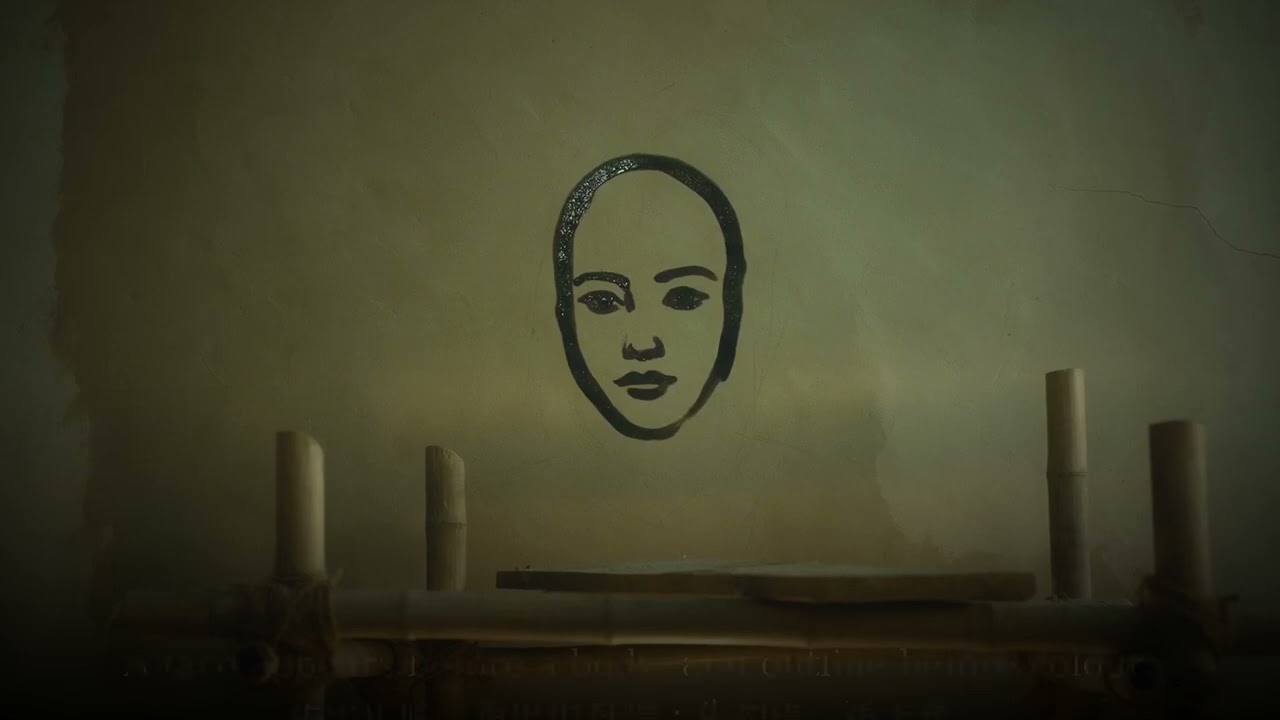
- A face appears before a body, and outline before colour.
- One brush stroke can take a quarter of an hour.
- The scaffold is bamboo, tied with rope, raised plank by plank.
- Cold air keeps the paint from drying too fast.
- A single figure may take a whole week to complete.
- Above the crowd, flying apsaras drift on their scarves.
- Their ribbons are drawn in one long unbroken line.
- In the corner he paints the merchant who paid for this.
- A family chapel, small and warm, paid for in advance.
- The merchant will be remembered. The painter will not.
- Nobody ever cut the painter's own name into the stone.
- He signs nothing, and the wall is the whole signature.
- Dynasty after dynasty, the cliff kept on growing.
- Tang painters made the figures tall, bold and warm.
- Later hands painted quieter faces, nearer the ground.
- Merchants from Sogdiana left their names in the margins.
- Languages crossed on the wall without ever meeting.
- Pilgrims left small offerings where the plaster had cracked.
- A thousand years of hands worked the same sandstone.
- Then the road changed, and the painting simply stopped.
- Sand moved in and closed the door quietly behind it.
- Centuries later a torch is lit inside the dark again.
- The colours are still here, faded but holding their names.
- Visitors walk slowly, careful of the floor beneath them.
- None of this was ever meant to be seen this way.
- The painters left us shadow, light, and a great deal of green.
- A quiet cliff still outlasts the empires that made it.
Twelve free pages on the objects of China – and ten Chinese words from the films – are in The Art of Chinese Tea: A First Look.
Sources
- [1] Wall Paintings Conservation at Mogao Grottoes – Getty Conservation Institute
- [2] Mogao Caves – UNESCO World Heritage Centre
The films and the music are AI-assisted and then chosen, written and cut by hand. Every claim above is drawn from the sources listed; anything we could not confirm has been left out.
Written and published by Eastern Whispers — how this site researches, and how it discloses its sources