
In the desert at Dunhuang, a honey-coloured cliff rises straight out of the sand and opens into hundreds of painted caves. It began around AD 366, when a monk named Yuezun is said to have cut the first shrine into the soft sandstone. Over the following thousand years, merchants, monks and whole families paid for more. They left behind roughly 492 cave temples and some 45,000 square metres of wall painting, and a question that still has no answer: who were the hands that made it?
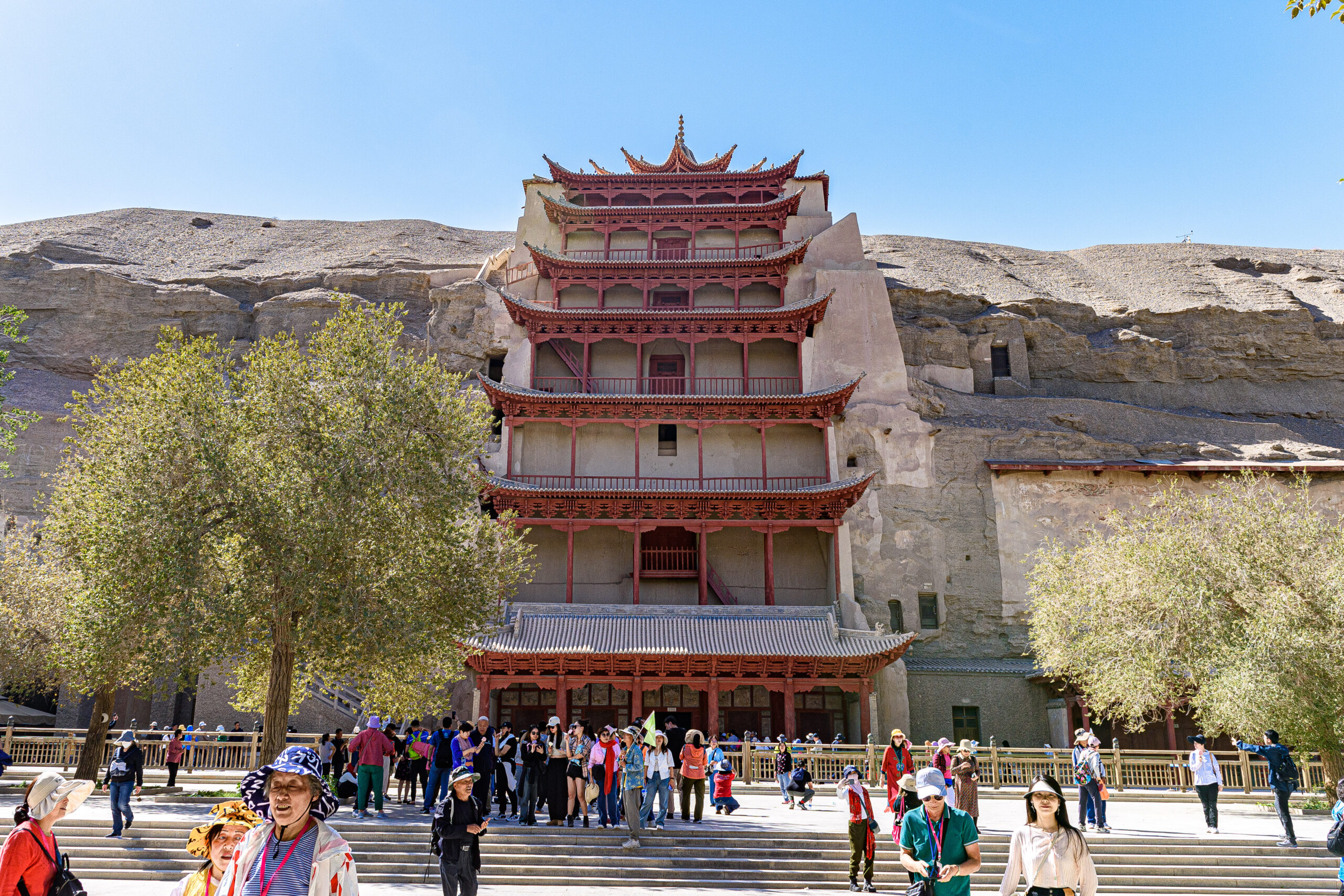
At dawn the desert touches a cliff the colour of honey. The rock is soft sandstone, easy to cut and easy to forget, and travellers saw it long before they arrived. Monks chose the cliff and began to cut inward: first a chisel, then a chamber, then a face. Shrines were carved the size of a room, and larger. Wind carried sand over the entrance steps every night, and every night the steps were swept. Some people came to pray; others came to leave a mark. The earliest shrine is credited to the monk Yuezun, said to have opened the rock around AD 366, and from that single opening the cliff kept growing.
The colours were stone. Malachite green was ground until it was finer than flour; azurite blue came out of the mountains, dull until washed; cinnabar red was the heaviest and the most expensive; gold leaf was beaten until it floated on a breath. The wall was plastered three times before any colour touched it. A painter set his lamp on a ledge, climbed a bamboo scaffold tied with rope, and began at the top, where the light was worst. One brush stroke could take a quarter of an hour and a single figure a whole week. In the corner he painted the merchant who had paid for the chapel. The merchant would be remembered; he would not.
Dynasty after dynasty, the cliff kept growing. Tang painters made the figures tall, bold and warm; later hands painted quieter faces, nearer the ground. Merchants from Sogdiana left their names in the margins, in scripts that crossed the wall without ever meeting. Pilgrims left small offerings where the plaster had cracked. Then the trade routes shifted, the work stopped, and sand moved in and closed the doors quietly behind it. Centuries later a torch was lit inside the dark again. The colours were still there, faded but holding. In 1987 the Mogao Caves were named a UNESCO World Heritage Site.
Watch the film
Episode 5 · Caves of Light. Premiere date to be announced.
About the music
The score for this episode is built on the guqin as a contemplative voice, with pipa tremolo for colour and craft, erhu carrying the long melody, yangqin as texture, and a low frame drum like a slow heartbeat, over desert wind and distant camel bells. It is entirely instrumental: there is no singing and no spoken word anywhere in the music.
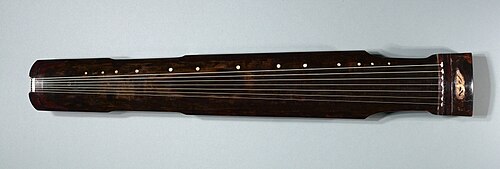
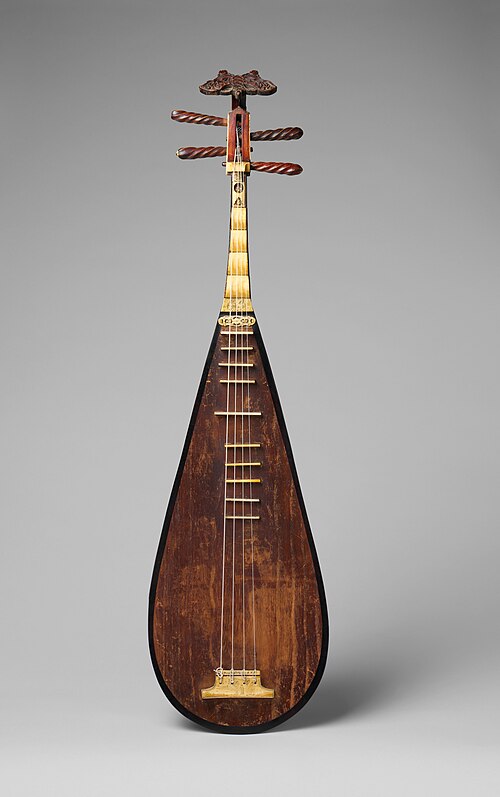
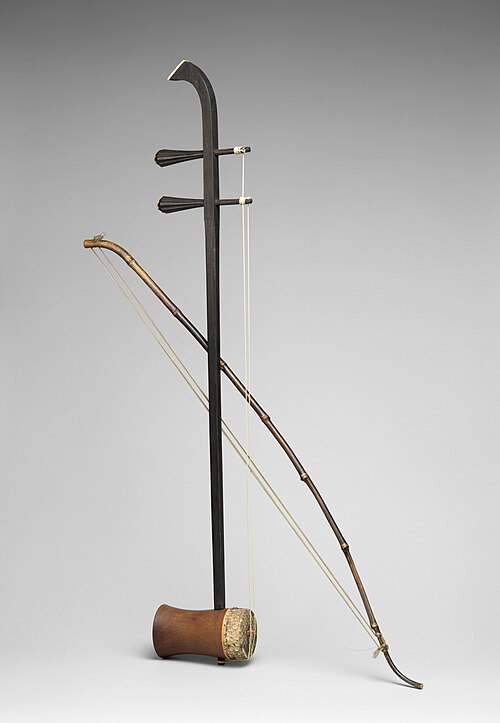
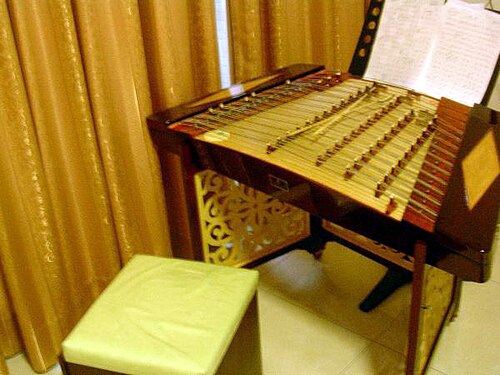
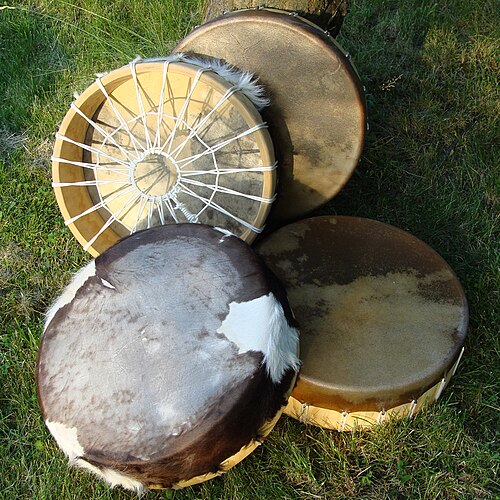
Instruments heard in this episode. Photographs: Guqin; Pipa; Erhu; Yangqin & Frame drum.
Go further: The Story of the Silk Road
Our illustrated e-book follows the whole road — the gates, the caravans, the caves at Dunhuang, the silk that was worth an empire — across 40 to 60 pages of story, maps and images. It is written for readers who want the long version.
Free: Silk Road Route Map & Timeline
Leave your email and we will send a printable map showing the ancient route from Chang’an to Rome beside today’s rail and sea corridors, with a timeline of key dates and a pronunciation guide for the place names.