
At the eastern end of the Silk Road stood the largest city on earth. Chang’an, today’s Xi’an, was laid out as a strict grid of walled wards, and its Western Market was crowded with Sogdian traders, Persian glass and bolts of silk used as money. City life ran to a timetable: a drum at dusk closed the wards, and a bell at dawn opened them again. The walls are rebuilt now and the grid is still visible from the air.
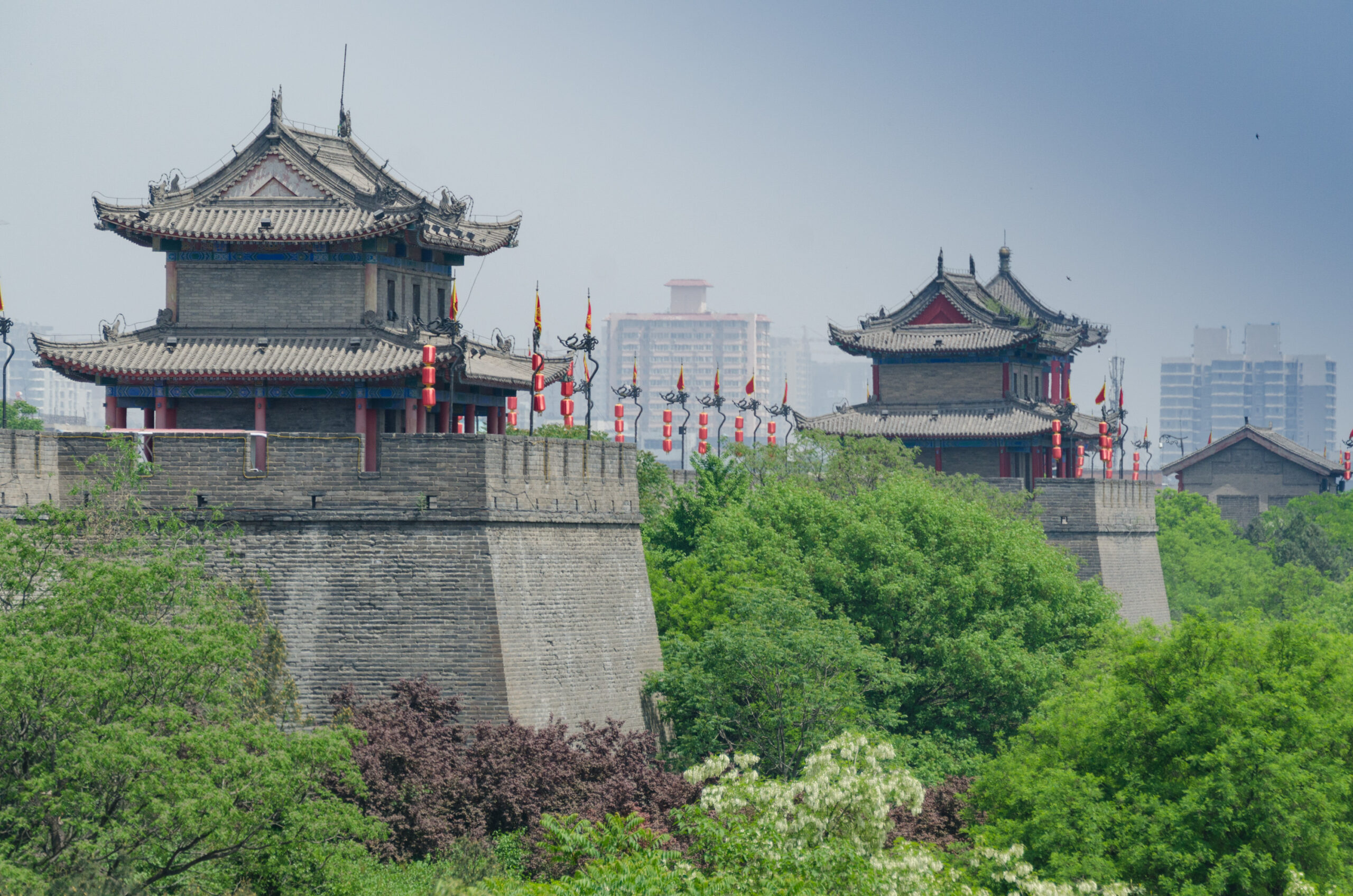
Chang’an was laid out as a grid: 108 walled wards inside the outer walls, eleven gates, and streets that ran straight because the empire preferred straight lines. Around a million people lived inside, more than in any other city on earth at the time, and the road from the west entered through a single gate, so whatever had survived the desert arrived there first. In the Western Market you could hear six languages before midday. Sogdian families sold from stalls their grandfathers had opened, next to Persian glass held to the light like frozen water, highland wool, carved jade and saddles built for long riding.
Silk in this city was not only cloth. It was currency: taxes and large transactions were reckoned in bolts of standard size, money with a weave. A day began with noodles pulled by hand and tea from the south; in a side room a foreign monk copied a text in a curved script; two men played weiqi with stones from a river; a boy traced the character for horse in the sand, not knowing the word had come from far away. Then the light changed. One deep stroke of the drum tower closed the day, ward gates swung shut one after another, stalls were tied down, a lamp-lighter walked the avenue with a long pole, and by the last drum a million people were indoors, not by fear but by agreement and habit.
That is what an empire actually ran on: timetables. Chang’an was not so much the road’s destination as its engine — everything going west was priced here first, and everything coming east was unpacked here first. The old walls have been rebuilt, and the grid of the wards is still visible from the air; where the Western Market stood there is now a metro station and a car park. At dusk people still gather beneath the drum tower, and the streets carry far more than six languages. A road only ends if somebody stops welcoming strangers, and this city never learned how to stop.
Watch the film
Episode 4 · The Capital. Premiere date to be announced.
About the music
The yangqin, a hammered dulcimer, gives this episode its brightness, trading phrases with the pipa as the lead voice. The erhu carries the indoor scenes, the guqin comes forward at dusk, and the frame drum alone marks the closing of the wards. There is no singing and no spoken word; the ensemble is bright and busy in the market and thins to a single drum at curfew.
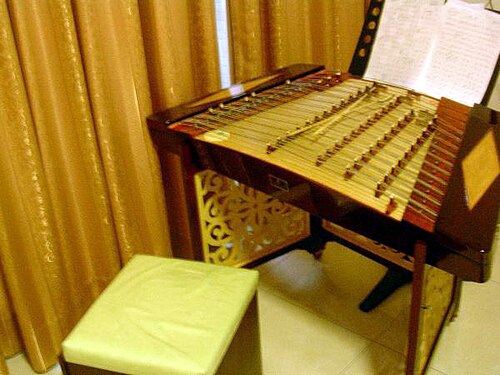
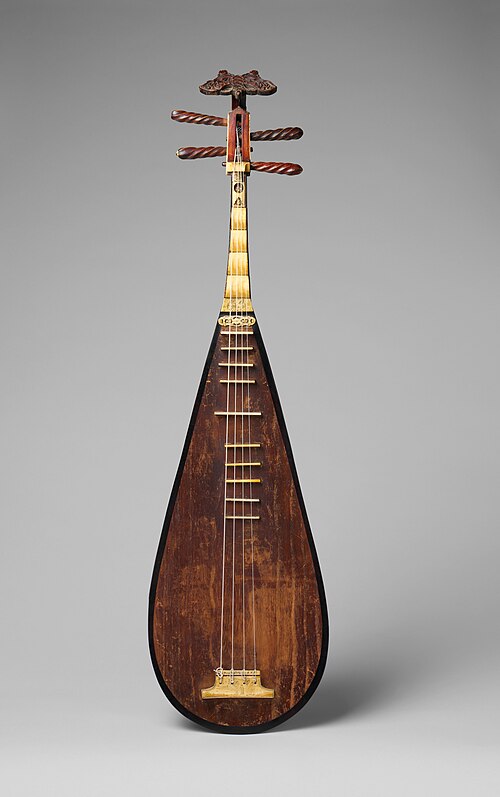
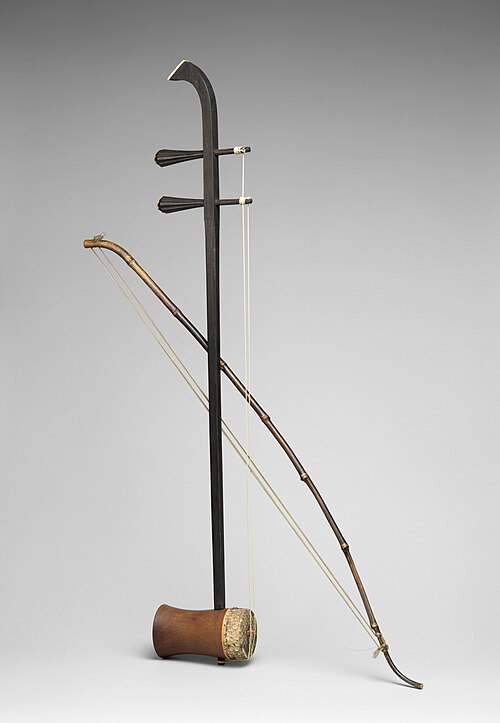
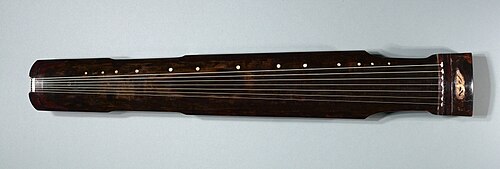
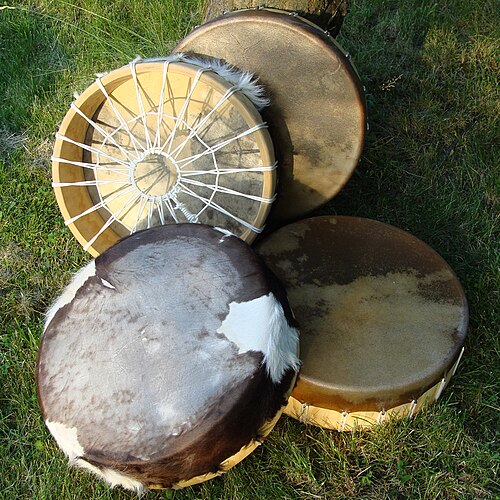
Instruments heard in this episode. Photographs: Yangqin; Pipa; Erhu; Guqin & Frame drum.
Go further: The Story of the Silk Road
Our illustrated e-book follows the whole road — the gates, the caravans, the caves at Dunhuang, the silk that was worth an empire — across 40 to 60 pages of story, maps and images. It is written for readers who want the long version.
Free: Silk Road Route Map & Timeline
Leave your email and we will send a printable map showing the ancient route from Chang’an to Rome beside today’s rail and sea corridors, with a timeline of key dates and a pronunciation guide for the place names.